
Mehndi for Nikah & Walima: Planning It Across Two Events
How to plan bridal mehndi around a nikah and walima — style choices, timing across the two days, the groom's mehndi, and the safe-henna essentials.
By Aliya, Founder, Hennaya
14 August 2026 · Updated 7 October 2026 · 4 min read

A Muslim wedding often spans a mehndi ki raat, the nikah, and the walima (the reception hosted by the groom's family). Planning the bridal mehndi around those events keeps the colour right for each.
The events and the timing
| Event | Typical timing | Mehndi consideration |
|---|---|---|
| Mehndi ki raat | 1–3 days before the nikah | The bride's design is applied here |
| Nikah | The wedding ceremony | Stain should peak here — apply ~2 days before |
| Walima | 1–3 days after the nikah | Design will be a few days old; still rich if it started dark |
Because henna keeps deepening for 24–48 hours after the paste comes off, apply so the stain peaks on the nikah day, then it carries through to the walima. The bridal mehndi timeline & aftercare has the full countdown.
Style
Nikah brides most often choose Arabic or Indo-Arabic work:
- Arabic — bold florals and trailing vines with generous bare skin; faster to apply, photographs with contrast (Arabic mehndi design guide).
- Indo-Arabic — the Arabic layout with fine Indian-style fills in the anchors and cuffs; the most popular modern bridal choice.
- Fuller traditional work is also chosen — it's a personal call, not a rule.
A crescent-and-star motif tucked into a border, or the couple's initials worked in discreetly, are common personal touches. Compare the families in Arabic vs Indian vs Indo-Arabic mehndi.
The mehndi ki raat
The mehndi night is a celebration in its own right — music, songs, and the groom's family often bringing henna and gifts. Practical points:
- Book the artist(s) 2–3 months ahead; a second artist for family and guests.
- Start the bride early — a full design takes 4–6 hours.
- Set up a guest station with instant cones and stencils.
- See the groom & family mehndi guide and what is a mehndi ceremony.
The groom's mehndi
Usually a small, meaningful motif — the bride's initials, a date, a band on one finger, or a single palm emblem — applied at the mehndi ki raat. Quick to do, subtle under a sherwani. See mehndi designs for men.
Design ideas for a nikah bride
- Negative-space Indo-Arabic — bold florals with bare skin, a filled wrist cuff, one personal panel.
- Crescent-and-star border — the festival motif worked discreetly into a scalloped cuff.
- Rose-and-jaali back of hand — a layered rose centre with net fill and a trailing vine.
- Forearm cuff, not full fill — a strong 3–4 cm band at mid-forearm with open skin around it.
- Feet: a diagonal spray from the ankle across the top of the foot (feet & ankle mehndi design guide).
Compare the layouts in Arabic mehndi design guide and see current directions in bridal mehndi design trends.
Safe henna only
Use natural, body-art-quality henna and patch test the bride 48 hours before (how). Never "black henna" — it contains PPD and causes chemical burns and lifelong allergy (why). Natural henna is halal and, once dry and scraped, does not form a waterproof layer, so it does not affect wudu.
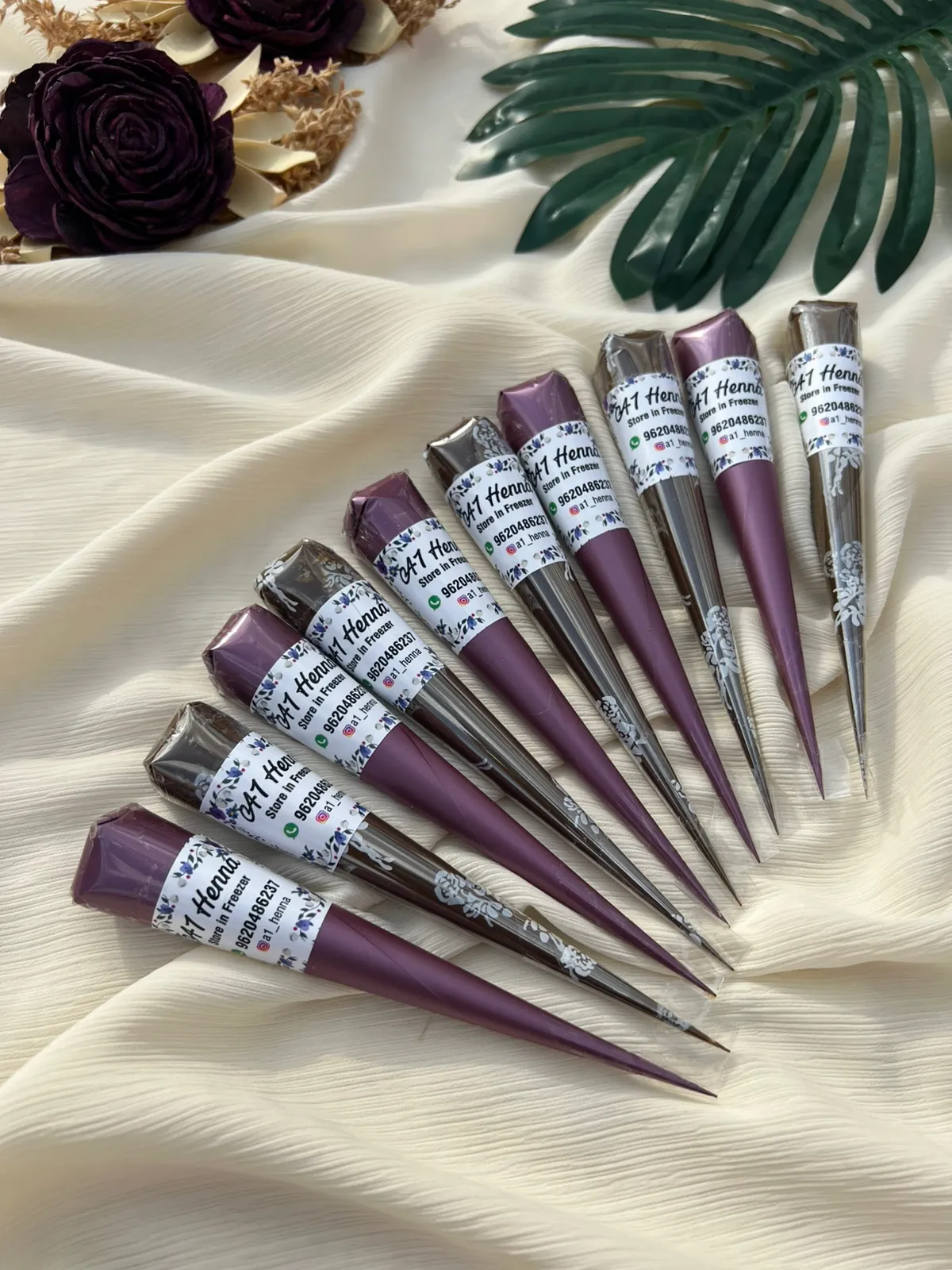 Henna ConesOrganic Henna ConesOrganic henna paste * Rich, natural henna stain * Halal · No PPD * Fine tip for detailed designs * Freshly hand-rolled in Bengaluru₹40View product →
Aftercare across the two events
The stain peaks 24–48 hours after removal, so with the right timing it's at its richest for the nikah and still strong for the walima:
- Scrape the paste off dry the morning after the mehndi ki raat.
- No water for 12 hours; seal with oil, and balm overnight.
- Through both events, re-oil before every wudu, meal and handwash.
- Keep sanitiser and harsh soap off the design.
Full method: how to get a dark henna stain.
Coordinating family and guests
The mehndi ki raat usually decorates the bride, both mothers, sisters and close friends. Book in order of who needs the darkest stain first (bride, then close family), run a stencil station for everyone else, and send guests home with one line of aftercare. See the groom & family mehndi guide and, for costs, bridal mehndi cost in Bangalore.
Hennaya supplies bridal-grade natural cones across Bengaluru — Frazer Town, Shivajinagar, BTM Layout, Jayanagar, Koramangala, HSR Layout — and runs henna classes.
Questions people ask
When is bridal mehndi applied for a nikah?
Usually at the mehndi ki raat (mehndi night), one to three days before the nikah. Because henna peaks 24–48 hours after removal, applying two days before the nikah means the colour is richest on the day.
What mehndi style suits a nikah bride?
Arabic and Indo-Arabic styles are the most common — bold florals with negative space, elegant forearm cuffs, and often a crescent-and-star motif worked subtly into the border. Density is a personal choice.
Does the groom get mehndi for a nikah?
In many families, yes — a small motif or the bride's initials on one hand, applied at the mehndi ki raat alongside the bride's and family's.
Keep reading
Navratri Mehndi: Designs That Survive 9 Nights of Garba
Navratri mehndi that holds through nine nights of garba, right up to Dasara/Dussehra — quick festive designs, when to apply, and aftercare that lasts.
Eid Mehndi Designs: How to Choose the Right One
Jaali, paisley or a full sleeve? A quick guide to picking an Eid mehndi design that fits your celebrations, your outfit, and how long you can sit still.
Festival Mehndi: Get the Timing Right Every Time
When to apply for Karva Chauth, Eid and Diwali so the colour peaks on the day itself — not the morning after — plus fast designs for the busy weeks.