
Mehndi Designs for Men: Subtle Ideas for Grooms
Understated henna for grooms and men — initials, bands, single motifs, and where to place them — plus timing and aftercare for a clean, quick design.
By Aliya, Founder, Hennaya
29 August 2026 · Updated 7 October 2026 · 4 min read

Groom mehndi has become a small but expected part of many weddings, and men outside weddings sometimes want a simple design for a festival. The brief is almost always the same: subtle, meaningful, quick.
Design ideas
- Initials or a wedding date on the inner wrist or the side of one finger.
- A single palm emblem — a motif from the couple's story, a deity, a symbol for music, sport or work.
- A finger band — a thin ring of pattern around one finger, like a henna ring.
- A wrist band — a narrow cuff, filled or outlined, worn like a bracelet.
- A coordinated hidden motif — a small element that matches part of the bride's design, so the two connect.
- A back-of-hand sprig — one small flower or geometric motif near the base of the fingers, nothing else.
Keep it to one element. The appeal of men's mehndi is restraint — see minimal mehndi designs for the same principle.
Placement
- Inner wrist — easy to show or hide; good for initials and dates.
- Back of one hand — visible in photos of the couple's hands together.
- One finger — the most understated option.
- Avoid the palm if he'll be shaking a lot of hands at the reception — a fresh palm stain can transfer.
Timing
A groom's design takes 10–25 minutes, so it can be done on the day, well before the sherwani or suit goes on. For a deeper colour, apply the evening before and keep it on a few hours. Basic aftercare still applies:
- Scrape the paste off dry — don't wash it.
- Avoid water for a few hours (12 for the darkest result).
- Dab on a little oil and keep the hand warm.
Full method: how to get a dark henna stain.
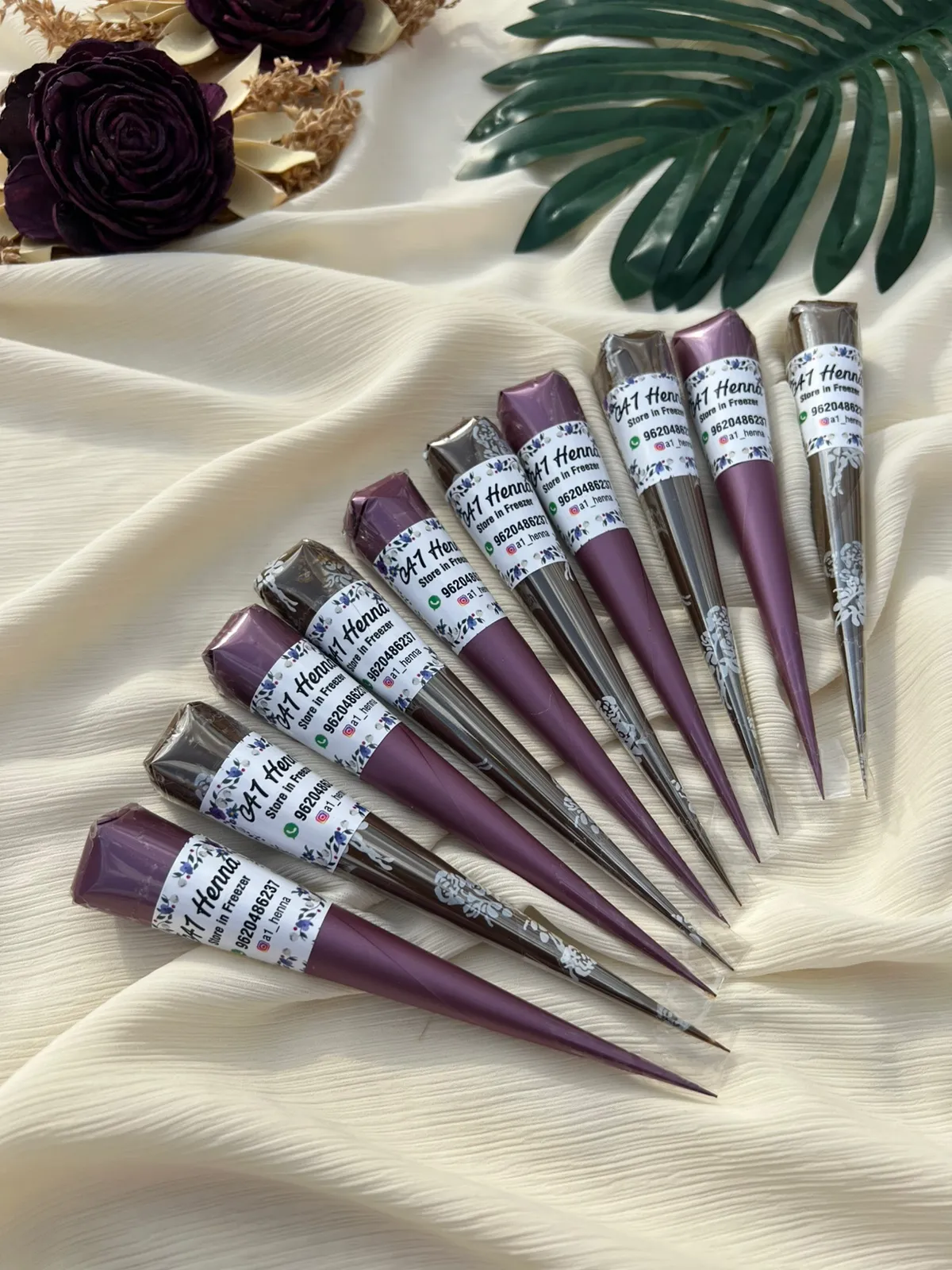 Henna ConesOrganic Henna ConesOrganic henna paste * Rich, natural henna stain * Halal · No PPD * Fine tip for detailed designs * Freshly hand-rolled in Bengaluru₹40View product →
Safety
Use natural, body-art-quality henna only. Never "black henna" — the fast-black paste sometimes pushed on men who "don't want it too red" is a PPD product that causes chemical burns and lifelong allergy (why). Natural henna on a man's hands reads as a warm brown, which suits most designs. Patch test 48 hours ahead if it's a new cone (how).
Motif ideas by interest
Give the artist a starting point:
- Music: a small tabla, guitar or sur symbol.
- Sport: a cricket bat, a football, a bike silhouette.
- Faith: an Om, a crescent, a small Ganesha, a khanda.
- Nature / travel: a mountain range, a compass, a paper plane.
- The couple: their initials in a monogram, the wedding date in Roman or Devanagari numerals, a motif that mirrors the bride's design.
One clean motif, well placed, beats several scattered ones.
Regional traditions
Men's mehndi isn't new — it's traditional in several communities:
- Rajasthani / Marwari grooms historically got fairly detailed designs, sometimes a small figurative panel on the palm.
- Muslim weddings often include the groom's mehndi as part of the mehndi ki raat, with the bride or her family applying a motif.
- Punjabi and many North Indian weddings now feature a small groom's design at the mehndi function, frequently the bride's initials.
Today the near-universal choice is understated: one motif, quick, subtle.
Everyday men's mehndi
Outside weddings, men sometimes want a design for Eid, a festival, or just because. The same rules apply: keep it to a single wrist, finger or back-of-hand motif; use natural henna for a warm brown; and follow basic aftercare so it doesn't look half-done the next day. See choosing Eid mehndi designs.
Timeline
| Step | Timing |
|---|---|
| Application | 10–25 min |
| Paste on skin | A few hours (evening before for a deeper colour) |
| Remove | Scrape dry — no washing |
| Peak colour | 24–48 hrs after removal |
| Fades | ~1 week (back of hand), longer on the palm |
A note on "he doesn't want it red"
Some grooms ask for "black henna" so the design isn't reddish. Don't. Natural henna on a man's (usually thicker, drier) hand skin often reads as a subtle brown anyway, especially on the back of the hand rather than the palm. If a darker, cooler tone is really wanted, jagua is a natural blue-black option — never a PPD "black henna" cone.
For the mehndi function
The groom's motif is usually applied at the mehndi ceremony alongside the bride's and the family's — see the groom & family mehndi guide and what is a mehndi ceremony.
Hennaya makes natural cones in Bangalore with delivery across Jayanagar, JP Nagar, Koramangala, HSR Layout and Indiranagar, and runs henna classes.
Questions people ask
What mehndi design suits a man or groom?
Usually something small and meaningful — initials or a wedding date on the inner wrist, a single motif on the palm, a band around one finger, or a small emblem worked to match an element of the bride's design. Quick to apply and subtle enough for a sherwani or suit.
How long does a groom's mehndi take?
Typically 10–25 minutes, so it's dry well before the outfit goes on. It still darkens best with a few hours on the skin and no immediate washing.
Do men get full-hand mehndi?
Occasionally, in some regional traditions, but most grooms today choose a small motif. Full coverage is uncommon for men.
Keep reading
Craft Your Unique Mehndi Design
Empower yourself by crafting personalized henna art that reflects your individuality. Discover how to embrace your creativity!
Bail Mehndi: Vine & Trail Designs for Hands
What bail mehndi is, the main vine layouts for hands and fingers, and how to draw a clean trailing bail design that works for daily wear or a festival day.
Mehndi Motif Meanings: Peacock, Lotus & More
What does a peacock, paisley or lotus actually mean in mehndi? A plain guide to the symbolism behind the motifs artists draw most, and when each one fits.