
Mehndi Motif Meanings: Peacock, Lotus & More
What does a peacock, paisley or lotus actually mean in mehndi? A plain guide to the symbolism behind the motifs artists draw most, and when each one fits.
By Aliya, Founder, Hennaya
4 October 2026 · 5 min read

Ever wondered why so many bridal mehndi designs feature the same handful of motifs — a peacock here, a paisley there, a lotus in the centre of the palm? Mehndi motifs aren't random: most of the traditional ones carry a specific meaning — fertility, luck, love or new beginnings — and knowing them helps you pick a design that actually says something, not just fills space.
Here's what the motifs you'll see most often actually stand for.
Peacock — beauty and romance
India's national bird shows up constantly in bridal mehndi, usually as a large fanned-tail centrepiece on the back of the hand. It's linked to grace, beauty and romantic love, which is exactly why it's such a popular choice for the bride's dominant design. We break down how artists actually build one in our peacock mehndi design guide.
Paisley (kairi / ambi) — fertility and good fortune
The teardrop, mango-shaped paisley is probably the single most-used motif in Indian mehndi — you'll find it repeated dozens of times as a filler across a dense bridal hand. It represents fertility and good luck, and its shape is old enough that variations of it show up in textile prints across South Asia, not just henna.
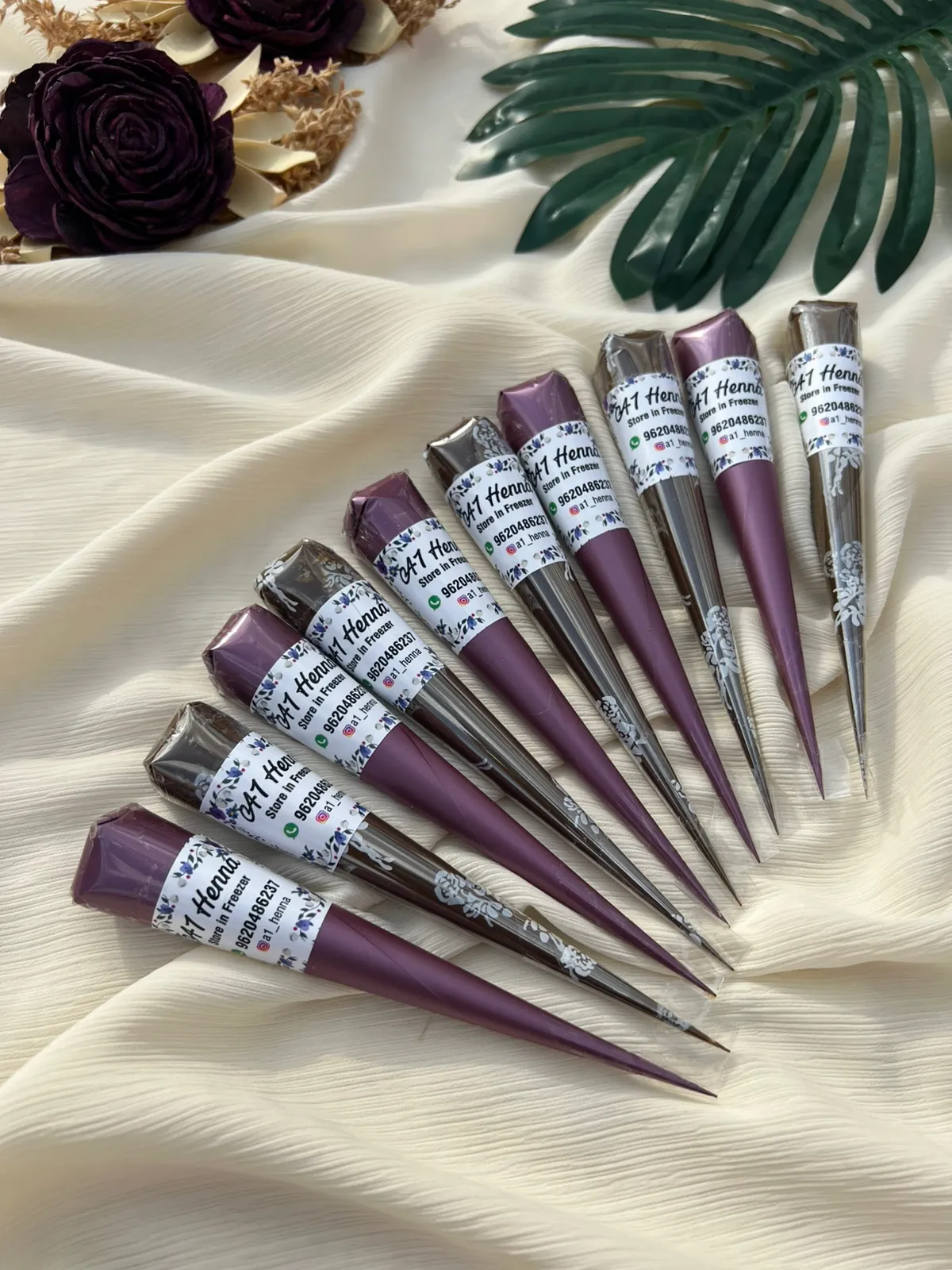 Henna ConesOrganic Henna ConesOrganic henna paste * Rich, natural henna stain * Halal · No PPD * Fine tip for detailed designs * Freshly hand-rolled in Bengaluru₹30View product →
Lotus — purity and new beginnings
The lotus blooms clean out of muddy water, which is exactly why it's come to represent purity, spiritual growth and fresh starts — a natural fit for a wedding. Drawn as a circular, layered bloom, it's a common palm centrepiece and often anchors a full mandala design. See a full build in our mandala mehndi design guide.
Mandala / circular motifs — wholeness and balance
A mandala is any radiating circular pattern, and in mehndi it symbolises wholeness, balance and the cyclical nature of life — fitting for a wedding, which marks one life stage completing and another beginning. It's also just a very natural shape for the palm, which is why so many designs anchor there.
Vines and leaves — growth and a lasting bond
Trailing vine work, common in Arabic-style mehndi, represents growth and a connection that keeps extending — the vine doesn't have a natural endpoint, which is part of the appeal for a marriage motif. It's also simply fast to fill, which is why Arabic bridal work looks bold and covers ground quickly. Compare the styles in Arabic vs Indian vs Indo-Arabic mehndi.
Net / jaali fill — intricacy and patience
A fine net-like fill pattern, jaali work is less about a single symbol and more about showing off skill and patience — it's some of the slowest, most detailed work an artist does, and traditionally that effort itself was seen as a sign of devotion to the occasion. Our jaali mehndi design guide shows how it's built line by line.
Elephant — wisdom, strength and luck
Elephants appear in bridal designs as a nod to strength, wisdom and good fortune — some families also link it to Ganesha, invoked at the start of any new venture, including a marriage.
Sun and moon — a paired blessing
A sun motif on one hand and a moon on the other is a popular Karva Chauth and bridal pairing, symbolising a couple completing each other. See it in context in our Karva Chauth mehndi guide.
Bird pairs (doves, love birds) — union and companionship
Two birds facing or flying together are a straightforward symbol of partnership, and often tucked into a corner of a bridal design as a smaller detail rather than the centrepiece.
Butterfly — transformation
Less traditional than the motifs above but increasingly common in modern and fusion designs, the butterfly stands for transformation and new beginnings — a fitting, lighter alternative to a full peacock for someone who wants meaning without a heavy centrepiece.
Chakra and tikki (round motifs) — protection and completeness
A simple filled circle or wheel-like tikki motif, often placed at the centre of the palm, is linked to protection and wholeness — it's also one of the fastest motifs to draw well, which is why you'll see it used as an anchor point in a lot of guest and family designs, not just bridal ones. Our tikki mehndi design guide has the full how-to.
Quick reference
| Motif | Meaning | Usually seen |
|---|---|---|
| Peacock | Beauty, romance | Back-of-hand centrepiece |
| Paisley / kairi | Fertility, luck | Repeated filler pattern |
| Lotus | Purity, new beginnings | Palm centrepiece |
| Mandala | Wholeness, balance | Palm, back of hand |
| Vine / leaf | Growth, lasting bond | Arabic-style trails |
| Jaali / net | Skill, devotion | Fine fill work |
| Elephant | Wisdom, strength | Bridal forearm panels |
| Sun & moon | Paired blessing | Karva Chauth, bridal pairs |
| Butterfly | Transformation | Modern, fusion designs |
| Chakra / tikki | Protection, wholeness | Palm centrepoint |
Do you have to pick a "meaningful" design?
Not at all. Plenty of the mehndi you'll see on Instagram — especially minimal or fusion styles — mixes motifs purely for how they look, and that's completely fine. Meaning matters most for a full bridal design, where a lot of couples like knowing the story their hands are telling. If you want to build a personal design around one or two of these, our easy mehndi designs for beginners guide is a good place to start practising the shapes.
Learn to draw them yourself
Aliya covers motif meaning alongside technique in Hennaya's Bangalore henna classes — knowing what you're drawing tends to make the drawing stick better too.
Delivery across Bengaluru
Practising these motifs at home? Hennaya delivers hand-rolled cones and practice cones across Jayanagar, Koramangala, HSR Layout, BTM Layout and all of Bengaluru, same day.
Next time you see a peacock or a paisley on someone's hand, you'll know exactly what it's saying.
Questions people ask
What does a peacock symbolise in mehndi?
The peacock is linked to beauty, grace and romance — it's one of the most requested bridal motifs, often drawn as a large centrepiece on the back of the hand or forearm with a fanned-out tail.
What does paisley mean in mehndi?
The paisley (also called 'kairi' or 'ambi', shaped like a mango) represents fertility and good fortune. It's one of the oldest and most-used mehndi fillers — you'll see it repeated across almost every dense traditional design.
What does the lotus mean in mehndi?
The lotus stands for purity and new beginnings, since it blooms clean out of muddy water. It's a common bridal centrepiece, usually drawn as a mandala-style circular bloom on the palm.
Do mehndi motifs have to mean something?
No — plenty of modern designs mix motifs purely for how they look, especially in Arabic-style floral work. Meaning matters more in traditional Indian and bridal designs, where certain motifs are chosen deliberately.
Keep reading
Bail Mehndi: Vine & Trail Designs for Hands
What bail mehndi is, the main vine layouts for hands and fingers, and how to draw a clean trailing bail design that works for daily wear or a festival day.
Tikki Mehndi: Round Motifs for Palms & Backs of Hands
What a gol tikki mehndi motif is, how to build one on the palm or back of the hand, and easy tikki design ideas for festivals and everyday wear.
Rose Mehndi: Draw It Once, Use It Everywhere
The rose is the most versatile mehndi motif going. How to draw a clean one, scale it up or down, and use it from a minimal wrist accent to full bridal hands.