
Jaali Mehndi: How to Draw a Neat Net Fill
Jaali — the net fill between bold outlines — gives mehndi its lace-like look. How to draw it evenly, keep the grid straight, and use it without over-filling.
By Aliya, Founder, Hennaya
15 September 2026 · Updated 7 October 2026 · 4 min read

The difference between a flat mehndi design and one that looks "intricate" is usually jaali — the fine net that fills the shapes. It's a simple technique that takes patience to do cleanly.
Jaali is a net or lattice fill: a grid of fine diagonal lines with a dot in each diamond, drawn inside an outlined shape to give a lace-like effect. It's one of the building blocks of Indian and Indo-Arabic mehndi.
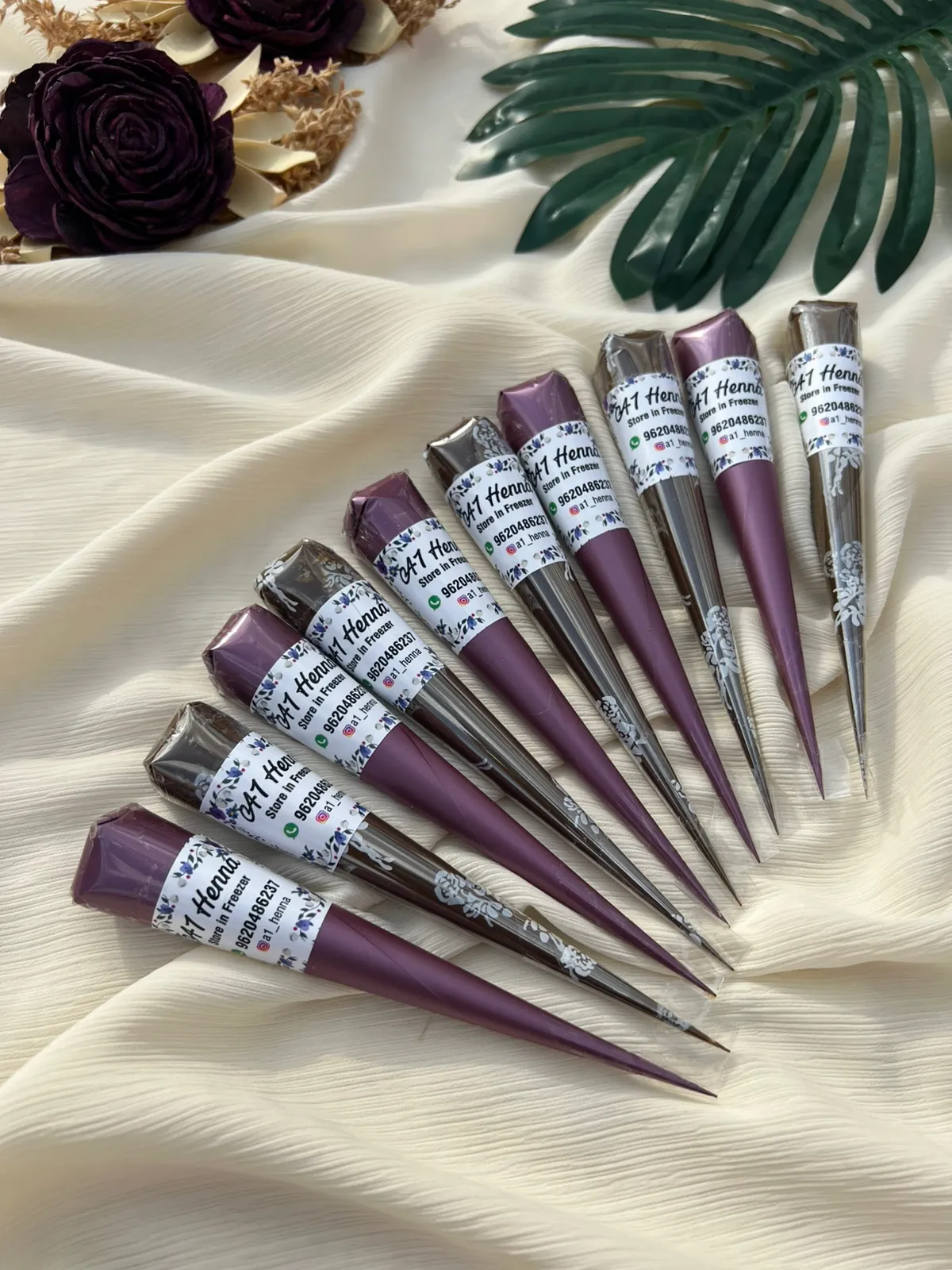 Henna ConesOrganic Henna ConesOrganic henna paste * Rich, natural henna stain * Halal · No PPD * Fine tip for detailed designs * Freshly hand-rolled in Bengaluru₹40View product →
How to draw jaali
- Outline the shape first — a paisley, a petal, a band. Jaali always sits inside an outline.
- First set of lines. Draw evenly spaced parallel lines at roughly 45°, from one edge of the shape to the other.
- Second set. Draw parallel lines at the opposite 45°, crossing the first set. Same spacing.
- Dots. A single small dot in the centre of each diamond.
- Leave a thin margin of bare skin between the jaali and the outline so it doesn't look crowded.
That's it. The skill is entirely in consistent spacing and a steady hand — jaali is where wobble and uneven gaps show most.
Practising jaali
Fill a page of squares with jaali every day for a week. Then try it inside curved shapes (paisleys, petals), which is harder because the spacing has to fan. Use a fine-tip cone — a nail cone or a well-cut organic cone — because thick lines eat the diamonds. Drill on cheap practice cones first.
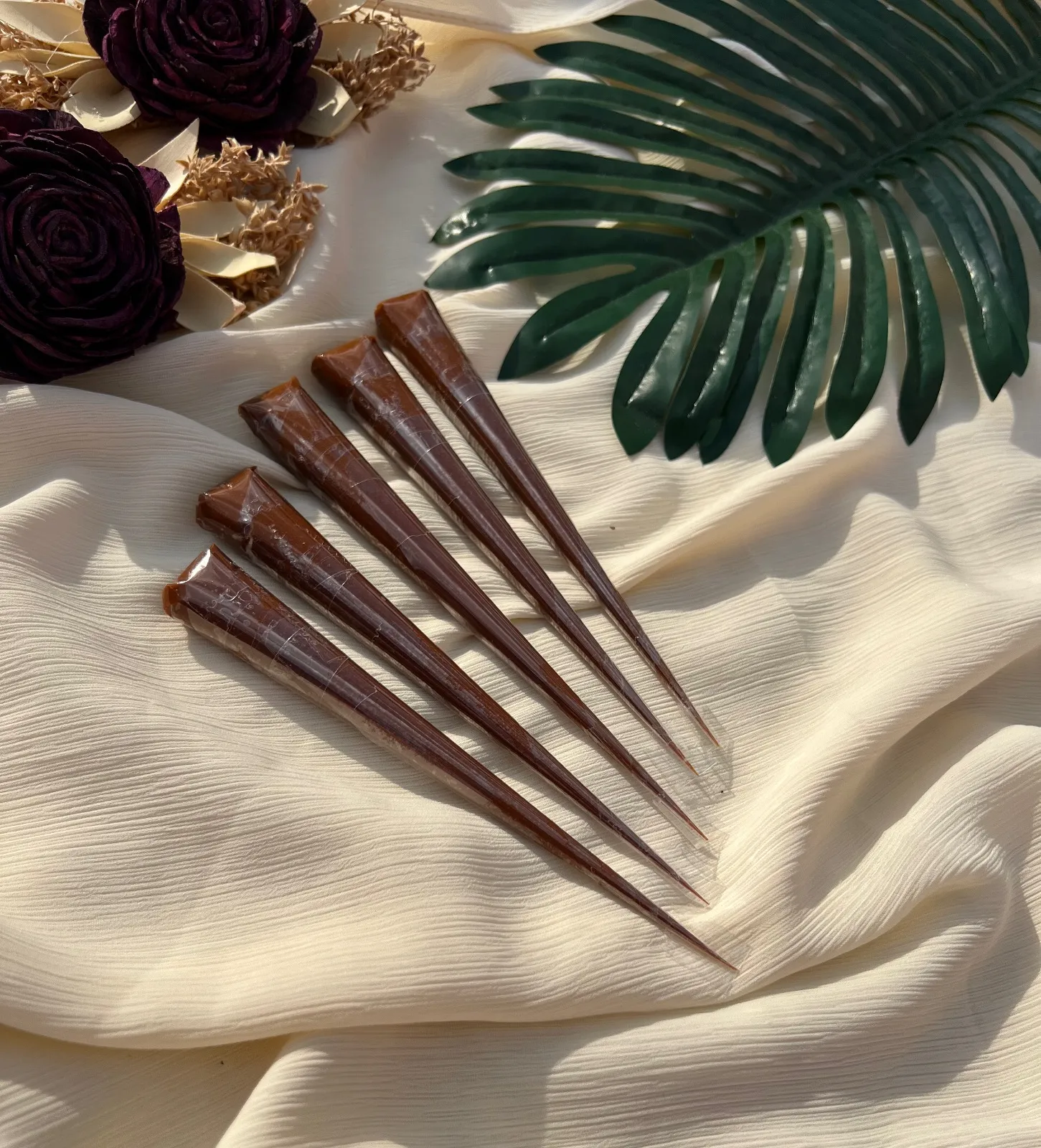 Henna ConesNail ConeExtra-fine tip for the tightest detail₹20View product →
Where to use jaali
- Inside a paisley or mango — the classic. Outline, jaali fill, dotted border.
- Feather eyes on a peacock.
- A forearm band — a strip of jaali between two bold lines.
- Half a palm — one side solid motifs, the other side jaali, split diagonally.
- Behind a rose — a patch of jaali around a rose motif to frame it.
Jaali is central to Rajasthani and Indo-Arabic bridal work — see Arabic vs Indian vs Indo-Arabic mehndi.
Jaali variations
- Diamond jaali — the standard 45° crossed grid with a dot in each cell.
- Square jaali — lines at 0° and 90° instead; a more geometric, modern look.
- Curved jaali — the grid fans to follow a curved shape (harder; the spacing has to open along the curve).
- Open jaali — no dots, just the grid; lighter, quicker.
- Double jaali — a dot and a tiny cross in each diamond; very dense, for a small feature area only.
Fixing common jaali problems
- Diamonds different sizes → your line spacing drifted. Go slower; glance back at the last few lines as a spacing reference.
- Grid looks grey from a distance → lines too thick or too close. Cut a finer tip; widen the spacing slightly.
- Jaali bleeding into the outline → leave a thin bare margin between the fill and the outline.
- Curved-shape jaali bunching → the lines need to fan, not stay parallel, inside a curve.
Don't over-fill
The most common jaali mistake is using it everywhere. A design needs contrast — solid areas, outline-only shapes, jaali, and bare skin. All jaali photographs flat. See shaded & 3D mehndi effect guide for building contrast, and mehndi design ideas by occasion for how much detail each event needs.
A worked example: jaali paisley
- Outline a large paisley (mango) shape.
- Inner border — a fine line about 2 mm inside the outline, following its curve.
- Fill the space between border and outline with a row of dots or tiny teardrops.
- Fill the centre with jaali: diagonal lines one way, then the other, dot in each diamond.
- Leave a thin bare margin between the jaali and the inner border.
- Tail — a few curved lines or small leaves off the pointed end.
That single motif, repeated at different sizes and angles, is the backbone of a traditional hand. Combine with a rose anchor and a peacock for a full design.
How much jaali is right?
A rough guide by occasion:
- Everyday / minimal: none, or one small jaali cap on a fingertip.
- Festival: jaali inside one or two motifs, the rest solid or open.
- Bridal: jaali in most shapes, but still broken up by solid areas and bare skin.
See mehndi design ideas by occasion.
Colour
Fine jaali only reads if the stain is dark and crisp. Fresh organic cone, long paste time, dry removal, no water for 12 hours — how to get a dark henna stain.
Hennaya makes fine-tip cones for detail work in Bangalore, delivered across Jayanagar, BTM Layout, HSR Layout, Koramangala and Indiranagar. Founder Aliya drills jaali and fine-fill technique in her henna classes.
Questions people ask
What is jaali in mehndi?
Jaali (or jali) is a net or lattice fill — a grid of fine diagonal lines, usually with a dot in each diamond — used inside outlined shapes to create a delicate, lace-like effect. It's a core technique in Indian and Indo-Arabic mehndi.
How do you draw neat jaali?
Draw one set of parallel diagonal lines first, evenly spaced, then a second set crossing them at the opposite angle. Keep the spacing consistent and put a single dot in the centre of each diamond. Work slowly — jaali is where a rushed hand shows most.
Should the whole design be jaali?
No. Jaali is a fill for selected shapes — a paisley, a petal, a band. A design that's all jaali reads as a grey mass in photos. Mix jaali with solid areas and bare skin.
Keep reading
Craft Your Unique Mehndi Design
Empower yourself by crafting personalized henna art that reflects your individuality. Discover how to embrace your creativity!
Bail Mehndi: Vine & Trail Designs for Hands
What bail mehndi is, the main vine layouts for hands and fingers, and how to draw a clean trailing bail design that works for daily wear or a festival day.
Mehndi Motif Meanings: Peacock, Lotus & More
What does a peacock, paisley or lotus actually mean in mehndi? A plain guide to the symbolism behind the motifs artists draw most, and when each one fits.