
Eid Mehndi Designs: How to Choose the Right One
Jaali, paisley or a full sleeve? A quick guide to picking an Eid mehndi design that fits your celebrations, your outfit, and how long you can sit still.
By Aliya, Founder, Hennaya
21 September 2026 · Updated 7 October 2026 · 5 min read

Eid henna is about celebration, not just decoration. The best design is the one that suits your time, your outfit and how long you can actually sit still — here's how to choose.
Match the design to your time
| Time you have | Design |
|---|---|
| 15–20 min/hand | Wrist mandala + one trailing finger vine; or fingertip accents only |
| 30–45 min/hand | Arabic floral strip along one side of the hand, back-of-hand centrepiece |
| 1–2 hrs/hand | Indo-Arabic half-and-half: dense jaali on the palm, open florals on the back |
| An afternoon | Full hands + forearm cuffs, fine Rajasthani fill — near-bridal |
If you're doing henna for several people on Chaand Raat, keep most designs in the first two rows and save the long one for whoever wants it most. Reusable stencils speed up matching designs for siblings and cousins.
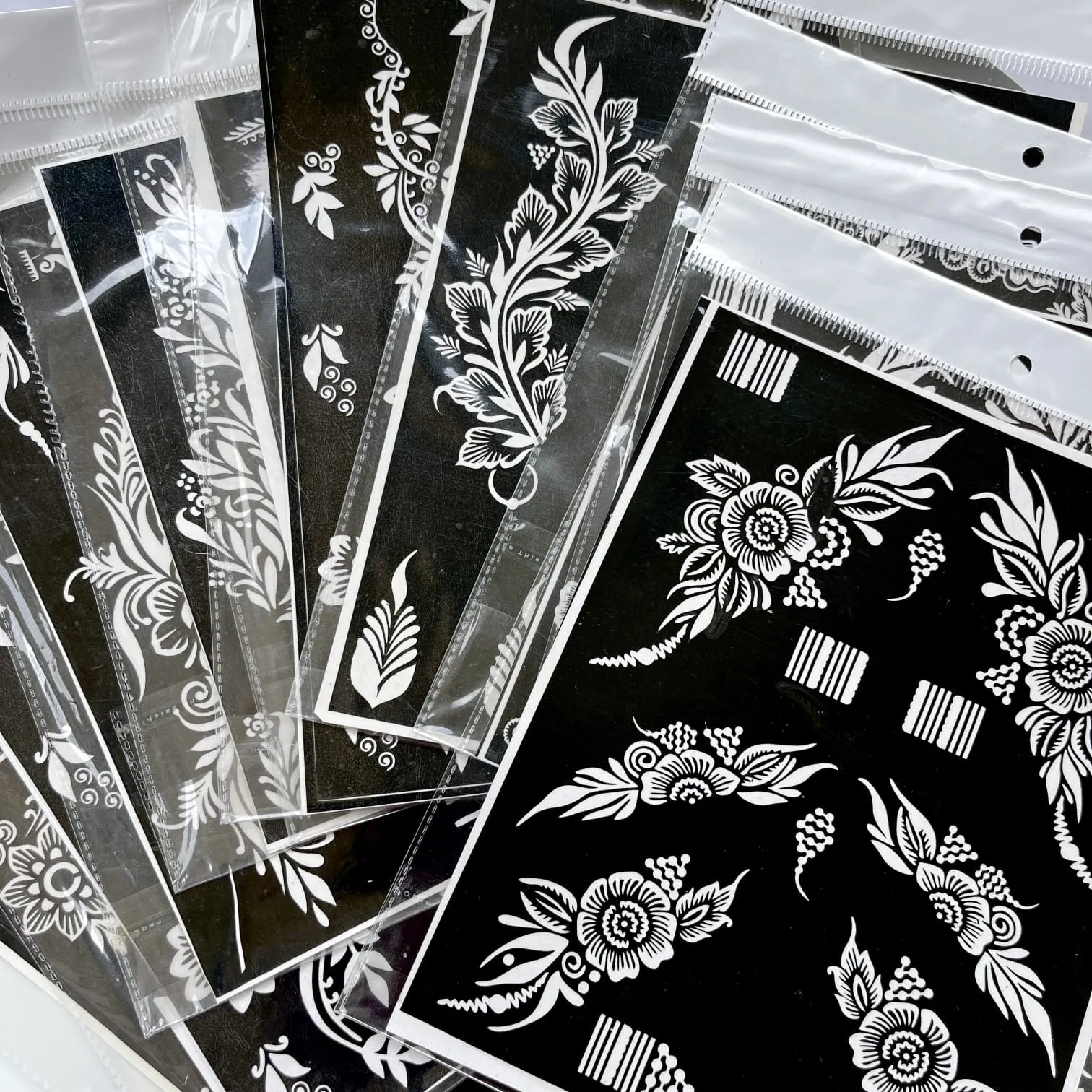 Mehndi StencilsReusable Mehndi StencilsSelf-adhesive, skin-safe vinylClean, symmetrical designs with no skill Reusable 5-6 timesWorks with instant dip or any henna coneSizes from Kids to Premium full-hand₹30View product →
Match it to your outfit
- Bold, structured outfit → open Arabic florals with negative space; the henna is a graphic accent.
- Classic or heavily embellished outfit → fine jaali and dense motifs to match the detail.
- The stain is always maroon-brown, so it works with every colour — choose by density, not shade.
Popular Eid motifs
- Jaali (net) fill between bold outlines — that lace-like, intricate finish.
- Paisley (mango) clusters flowing from the wrist toward the fingers.
- Crescent-and-star worked subtly into a border for Eid.
- Fingertip dips — solid stained tips, elegant on their own or with a light back-of-hand design.
- Cuff bracelets — a bold wrist band with open or filled pattern.
- Rose vines — layered roses trailing along one side of the hand, very current.
- Mandala palm — a single symmetrical medallion in the centre of the palm, framed by bare skin.
Learn to build these in easy mehndi designs for beginners and back-hand and finger design ideas.
Design by hand and finger
A festive Eid look often comes down to a few smart choices rather than full coverage:
- Palm: one strong element (mandala or rose cluster) with open space around it.
- Back of hand: a diagonal spray or a wrist-to-finger vine — dramatic, quick.
- Fingers: alternate — decorate index, middle and little finger; leave the ring finger open, or fill just the tips.
- Wrist: a defined cuff ties the whole design together and hides where a vine "ends".
Mirror the two hands for a finished look, or keep the dominant hand busier if you're doing your own.
Doing your own Eid mehndi
If you're applying it yourself the night before:
- Decorate your non-dominant hand first — it's the harder one to reach later.
- Keep the design on that hand simpler; save detail for the dominant-hand side you can control.
- Use a stencil for the trickier hand if your freehand isn't steady yet (how to use stencils).
- Work from the fingertips toward the wrist so your hand never rests on wet paste.
- Have everything ready — cone, tissue, tape, oil — before you start, because you won't have free hands once you begin.
New to freehand? Start with easy mehndi designs for beginners.
For a group on Chaand Raat
If you're the one doing henna for the family:
- Set up a comfortable station with good light and a stool.
- Do the people who need the darkest colour first (anyone travelling early, or a bride-to-be).
- Keep most designs to 15–25 minutes so everyone gets a turn before it's too late.
- Have a few instant cones and a stencil for the youngest and the least patient.
- Send everyone off with the same aftercare line: paste on for hours, scrape dry, no water for 12 hours.
Coordinating designs across the family
For sisters, cousins and friends who want to match:
- Pick one shared motif (a rose, a paisley, a small mandala) and arrange it differently on each person — same language, individual designs.
- Give the youngest and the least patient a quick stencil version of that motif.
- Do the person who needs the darkest stain (a bride-to-be, someone travelling) first, so their paste stays on longest.
- Keep a couple of instant cones for last-minute additions on Eid morning.
Aftercare through the Eid visits
The stain keeps developing for 24–48 hours, so protect it during the round of visiting:
- Scrape the paste off dry on Chaand Raat — no washing.
- No water for 12 hours — plan wudu and dishes around it, or use gloves.
- Dab oil before anything involving water; re-oil each morning of the celebrations for a subtle sheen in photos.
- Avoid sanitiser directly on the design — it lightens fresh henna fast.
Get the colour right for Eid day
Apply on Chaand Raat, keep the paste on for hours or overnight, scrape off dry, and keep the design away from water for 12 hours. The stain will look orange that night and deepen to a rich maroon by Eid morning — right in time for prayers and visiting. The full method is in how to get a dark henna stain. Use fresh natural cones — never "black henna", especially on children.
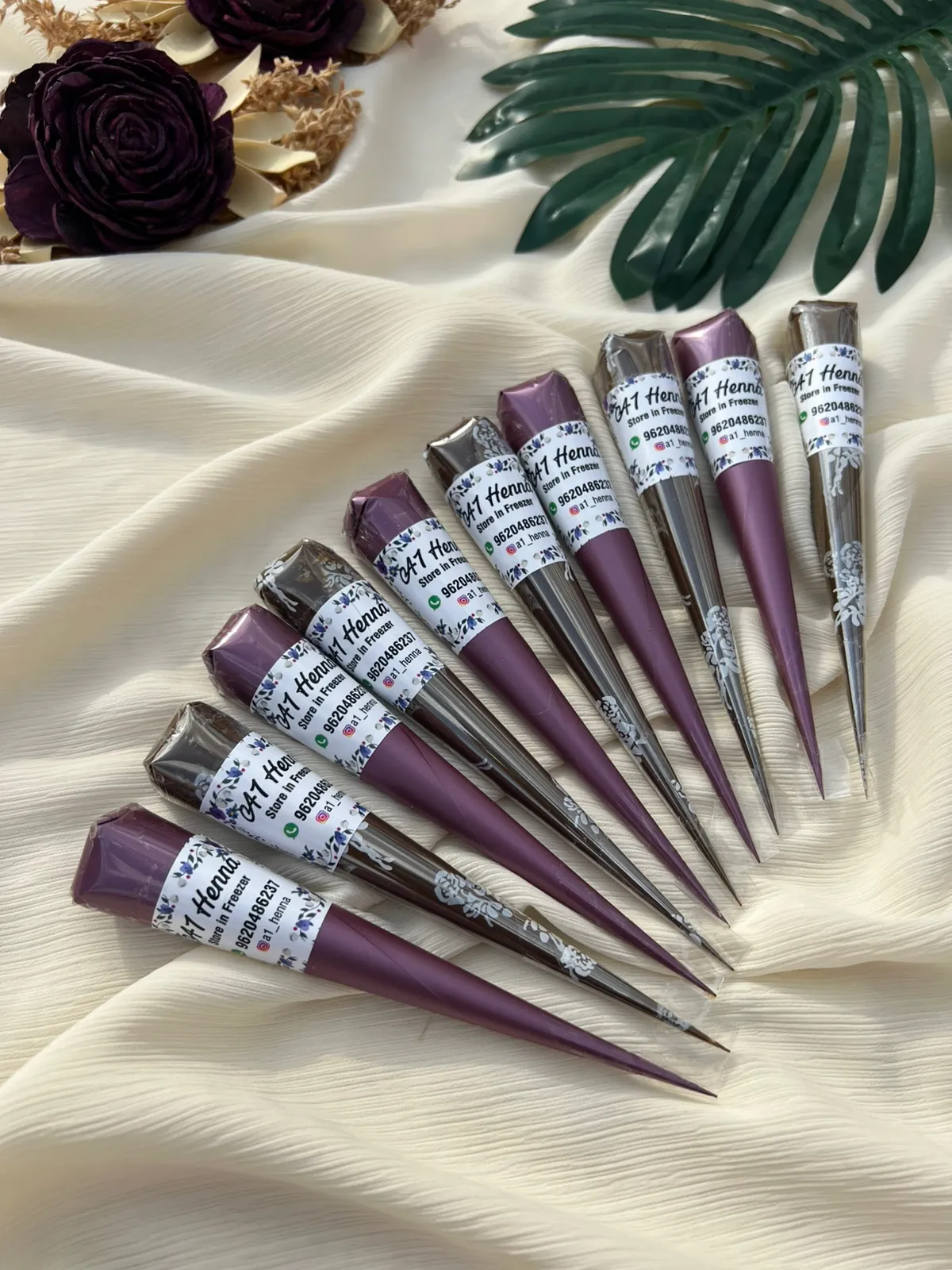 Henna ConesOrganic Henna ConesOrganic henna paste * Rich, natural henna stain * Halal · No PPD * Fine tip for detailed designs * Freshly hand-rolled in Bengaluru₹40View product →
Hennaya delivers cones and stencils across Bangalore — Frazer Town, Shivajinagar, BTM Layout, JP Nagar and beyond — in time for Chaand Raat, and runs classes year-round.
Questions people ask
When should I apply henna for Eid?
On Chaand Raat (the night before Eid). The stain darkens for 24–48 hours, so applying the night before means it looks its richest on Eid day and through the visits after.
What is a quick Eid mehndi design?
A wrist mandala with a single trailing vine down one finger, or a bold Arabic floral strip along one side of the hand. Both read festive and take 15–25 minutes per hand.
How do I make my Eid mehndi last through the celebrations?
Keep the paste on for several hours or overnight, scrape it off dry, avoid water for 12 hours, and seal with oil. Re-oil each morning during the Eid visits.
Keep reading
Navratri Mehndi: Designs That Survive 9 Nights of Garba
Navratri mehndi that holds through nine nights of garba, right up to Dasara/Dussehra — quick festive designs, when to apply, and aftercare that lasts.
Festival Mehndi: Get the Timing Right Every Time
When to apply for Karva Chauth, Eid and Diwali so the colour peaks on the day itself — not the morning after — plus fast designs for the busy weeks.
Raksha Bandhan Mehndi: Quick Designs & Timing
Pretty, fast mehndi for Rakhi day — wrist and finger designs that leave room for the rakhi, when to apply, and easy aftercare for a soft festive stain.