
Indo-Western Fusion Mehndi: Modern Layout, Real Motifs
Fusion mehndi mixes traditional motifs with a modern layout — negative space, clean lines, personalised bits. What works, what to skip, how to brief an artist.
By Aliya, Founder, Hennaya
9 September 2026 · Updated 7 October 2026 · 4 min read

Not every bride wants hands filled to the elbow, and not every occasion calls for it. Fusion mehndi keeps the craft — the motifs, the fine fills — but frames it in a modern layout.
Fusion or Indo-Western mehndi combines traditional Indian motifs and jaali fills with a contemporary layout: generous negative space, cleaner lines, and often geometric or personalised elements. It's lighter and faster than classic dense bridal work.
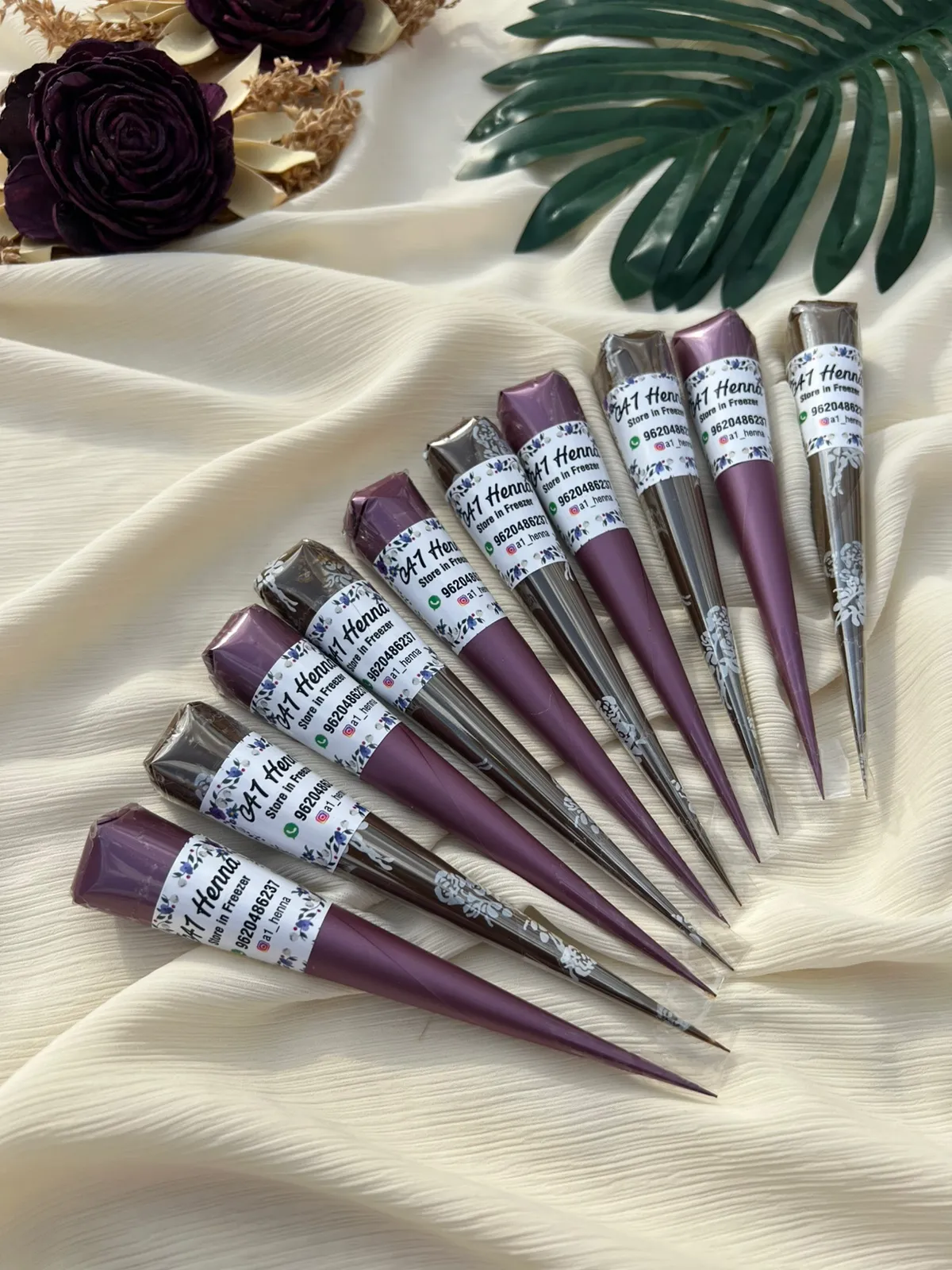 Henna ConesOrganic Henna ConesOrganic henna paste * Rich, natural henna stain * Halal · No PPD * Fine tip for detailed designs * Freshly hand-rolled in Bengaluru₹40View product →
What makes a design "fusion"
- Negative space as a feature — the bare skin between motifs is part of the design, not a gap to fill.
- Selective detail — one or two areas worked densely (a rose, a jaali panel), the rest open.
- Geometric elements — clean bands, chevrons, dot grids alongside the florals.
- Personalisation — initials, a date, a skyline, a shared hobby worked into one panel.
- Modern placement — a single decorated finger, a bold wrist cuff, a design weighted to one corner of the hand.
It's essentially Indo-Arabic taken further toward minimalism — see Arabic vs Indian vs Indo-Arabic mehndi and bridal mehndi design trends.
Fusion looks that work
| Look | Description |
|---|---|
| Negative-space Indo-Arabic | Bold florals and vines, lots of bare skin, a filled cuff |
| Single-finger feature | The whole design flows from one heavily-decorated finger |
| Corner-weighted | A dense motif at the wrist-side corner, thinning toward the fingers |
| Band + open hand | One strong forearm or wrist band, the hand itself light |
| Story panel | A traditional layout with one personalised figurative panel |
For everyday versions, see minimal mehndi designs for office and daily wear; for the wrist-led look, wrist & cuff mehndi design ideas.
What to avoid
- Glitter and white-paint add-ons as anything more than a one-hour photo look.
- Copying a celebrity design exactly — it was made for their hands and outfit. Take the idea.
- "Black henna" for a cooler-toned modern look — it's a PPD product that burns (why). For a genuine blue-black, jagua is the natural option.
- Uniform fine fill with no contrast — fusion still needs solid areas + outline + bare skin (shaded & 3D mehndi effect guide).
Personalising a fusion design
The "Western" half of Indo-Western is often the personal touches:
- A monogram of the couple's initials on one palm.
- The wedding date in Roman or Devanagari numerals in a band.
- A shared symbol — a mountain range, a compass, a music note, a pet.
- A skyline of the city where you met or will live.
- A single figurative panel in an otherwise abstract design.
Keep it to one or two — the elegance of fusion is restraint.
Briefing an artist
Bring references, mark what you like about each, name your must-include personal motifs and anything you dislike, and state your coverage and time comfort. A good artist adapts references to your hands — see bridal mehndi in Bangalore: the complete guide and bridal mehndi styles by region for the traditional end of the spectrum to blend from.
Fusion for the non-bride
You don't need a wedding to wear fusion mehndi:
- Office / events: a single geometric band on the wrist, or one decorated finger with a fine chain to a wrist motif (minimal mehndi designs).
- Sangeet / cocktail: a corner-weighted design with one shaded rose and lots of open space.
- Festivals: a bold mandala with negative space around it rather than a filled hand (Diwali, Eid).
Doing a fusion design yourself
Fusion is actually easier to self-apply than dense traditional work — fewer elements, more forgiving spacing. Keep the dominant hand's design simplest, use a stencil for a clean geometric element, and freehand the organic parts. See how to apply mehndi on yourself.
Colour
Fusion designs live or die on contrast and a dark stain — a crisp negative-space design with a pale stain looks unfinished. Fresh organic cone, long paste time, dry removal, 12 hours no water (how to get a dark henna stain).
Hennaya supplies natural cones and stencils across Bengaluru — Jayanagar, JP Nagar, Koramangala, HSR Layout, Indiranagar, Whitefield. Founder Aliya teaches modern and traditional styles in her henna classes.
Questions people ask
What is fusion mehndi?
Fusion (or Indo-Western) mehndi mixes traditional Indian motifs and fills with a modern, pared-back layout — lots of negative space, cleaner lines, geometric or personalised elements, and often lighter coverage than classic bridal work.
Is fusion mehndi suitable for a bride?
Yes — negative-space Indo-Arabic and personalised fusion designs are among the most popular bridal choices now. It photographs with strong contrast and takes less time than dense traditional work.
How do I ask an artist for a fusion design?
Bring 3–4 references, point out what you like about each (the negative space, a specific motif, the border), name any personal elements you want included, and say how much coverage and time you're comfortable with.
Keep reading
Craft Your Unique Mehndi Design
Empower yourself by crafting personalized henna art that reflects your individuality. Discover how to embrace your creativity!
Bail Mehndi: Vine & Trail Designs for Hands
What bail mehndi is, the main vine layouts for hands and fingers, and how to draw a clean trailing bail design that works for daily wear or a festival day.
Mehndi Motif Meanings: Peacock, Lotus & More
What does a peacock, paisley or lotus actually mean in mehndi? A plain guide to the symbolism behind the motifs artists draw most, and when each one fits.