
Henna for Hair: Real Benefits, Simple Method, Honest Limits
What henna actually does for hair — colour, strength, a calmer scalp — a simple mix, how to apply it, and what it won't do. Fresh hair henna, Bangalore delivery.
By Aliya, Founder, Hennaya
5 October 2026 · 6 min read

Henna isn't only for hands. People have coloured and cared for their hair with it for hundreds of years, long before shop dye existed.
Henna for hair is a paste made from ground henna leaves. It stains hair a warm reddish colour and makes each strand stronger. It won't lighten your hair, and it doesn't wash out — it grows out slowly. That's the trade-off, and it's worth knowing before your first go.
We make single-ingredient Herbal Hair Henna in Bangalore — just the henna plant, nothing mixed in. Why that matters comes up again further down.
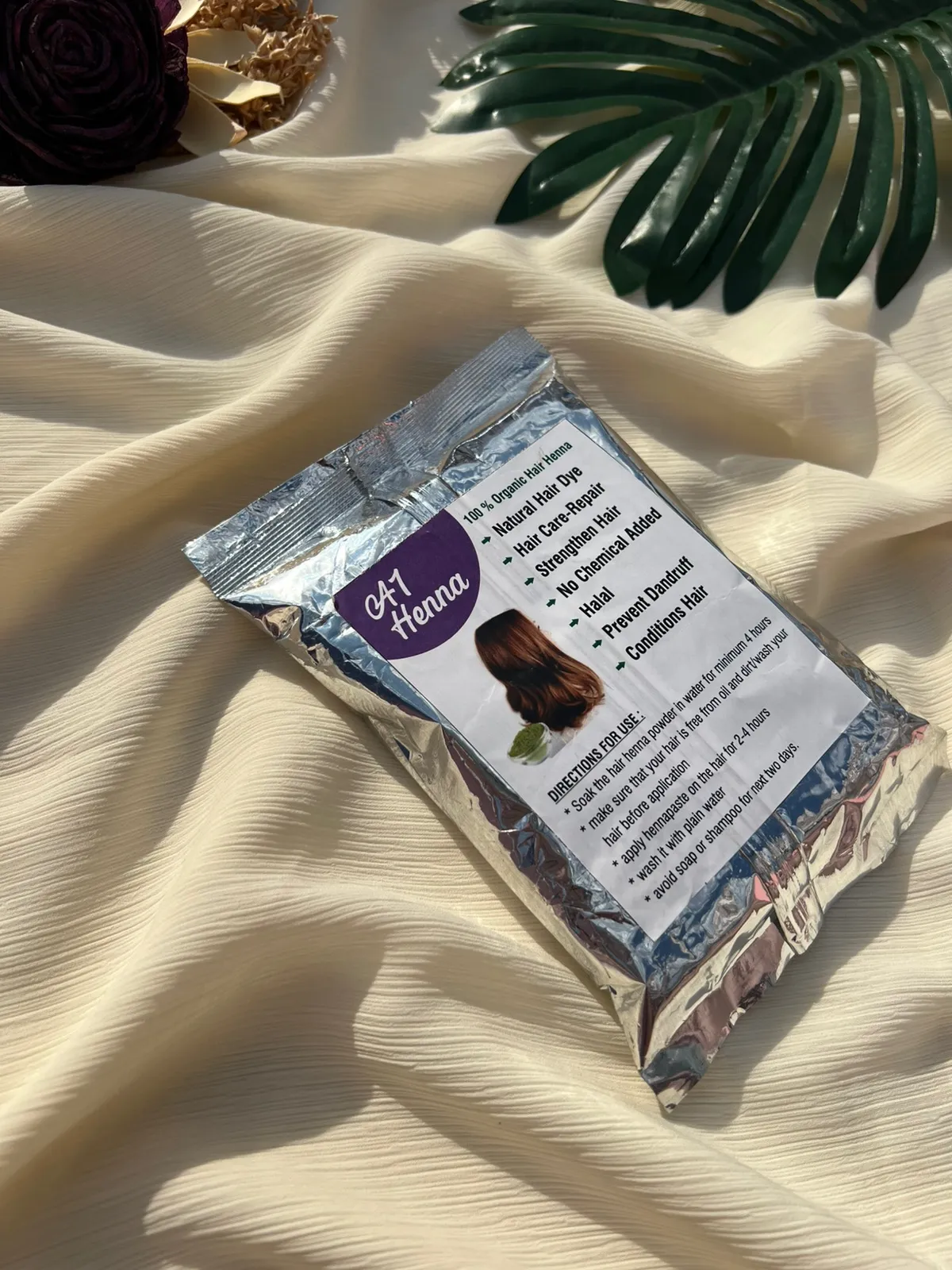 Hair HennaHerbal Hair HennaOrganic henna powder for hair₹80View product →
Benefits of henna for hair
Three main ones:
- Colour. A see-through copper-red that builds up a little more each time you use it. Bright on grey hair; a warm shine in sunlight on dark hair.
- Strength. The dye in henna, called lawsone, grips onto the protein in your hair. After a few uses strands feel thicker and smoother, and they snap less. Henna strengthens rather than damages — the common myths are picked apart in does henna damage hair.
- Scalp. Lots of people find henna settles an itchy, flaky scalp. Not everyone does, but it's common enough to mention.
In India you'll hear this called mehndi for hair — same plant, same result.
What henna won't do: lift your natural colour, give ash or cool tones, or repair split ends. It's a warm-tone, strengthening treatment, not a fix-all. Weighing it against a box or salon colour? See henna vs chemical hair dye.
Want henna you can trust on your hair? Order fresh Herbal Hair Henna.
A simple mix
Keep it plain:
- 100 g henna powder — the label should read Lawsonia inermis and nothing else
- Warm water, or cooled tea for a slightly deeper tone
- 1 tablespoon lemon juice or amla powder, to bring the colour out
- Optional: 1 teaspoon oil so it spreads more easily
Stir it to a thick yoghurt paste. Cover it and leave it somewhere cool for 4–6 hours, or overnight. When a smear on your palm leaves a clear orange mark within a minute, it's ready.
Skip anything sold as "growth henna" or "fast henna" with a long ingredient list. The extras are usually what leaves hair dry.
How to apply henna to hair
- Start with clean, dry hair. Put on gloves and smear a little balm along your hairline and ears so the skin doesn't stain.
- Work in small sections, root to tip, coating each one fully. Use more paste than feels necessary.
- Pile it up, cover with a cap, and leave it 2–4 hours.
- Rinse with water and conditioner only, until the water runs clear.
- Wait until the next day to shampoo. The colour keeps developing for 24–48 hours.
Old clothes and an old towel — the stain on fabric doesn't come out easily once it's dried in, so don't risk anything you like. If it happens anyway, our removing henna stains from clothes and fabric guide has the actual fix.
Getting brown or black instead of red
Henna on its own only gives copper-red. For brown or near-black you add a second plant, indigo (Indigofera tinctoria), in two steps:
- Henna first. Apply, leave 2–3 hours, rinse with water only.
- Indigo next, on towel-dried hair. Indigo works fast, so mix it with warm water just before you use it — no lemon, indigo hates acid. A pinch of salt helps it grip. Leave it 30–45 minutes (up to an hour for the deepest tone; longer doesn't help). Rinse with water only, and don't shampoo for 24–48 hours while it darkens.
More indigo time and more grey means a darker result. Mixing both powders in one go gives a softer warm brown instead. Always test on a hidden section first — your starting colour changes everything. Covering grey? The full timing is in henna for grey hair coverage.
Just want the conditioning?
If you mainly want stronger hair and a calmer scalp with barely any colour, make a henna gloss: 2–3 tablespoons of henna paste stirred into a cup of conditioner, left on 20–40 minutes. Much less colour, still some strengthening, and far easier to rinse out.
How often
Every 3–4 weeks for colour and upkeep, or a gloss every week or two. The colour stacks, so each round adds a bit more depth. Go slowly.
What can go wrong
- Too orange or brassy. Normal from plain henna on light or grey hair. Follow with indigo, or just repeat a few times to build depth.
- Dry, straw-like feel. Too much lemon, or left on too long with no oil. Next time use tea or water, add a teaspoon of oil, and cap it for 2 hours at most.
- Patchy colour. Some sections weren't coated fully. Work slower and use more paste.
- A green tint (rare). That's almost always a "compound" henna with additives, not pure henna. Throw it out.
- Colour fades in days. You shampooed too soon. Give it a full day next time.
Who should be careful
- Recently bleached or highlighted hair — test a hidden strand first; the result is hard to predict.
- Anyone booked for a salon colour soon — tell your stylist you use henna. Pure henna and indigo are usually fine, but "compound henna" and some "black henna" hair kits contain metallic salts that react badly with salon chemicals. Stick to single-ingredient powder.
- Very fine hair — henna adds a little weight and can feel heavy at first. It usually settles after a wash or two.
- A sore or broken scalp — patch test on your inner arm and check with a doctor first.
For the skin side of the "no chemicals" point, see natural henna vs "black henna" and what's in a henna cone.
Your first time, start to finish
- Buy plain henna powder — ingredient list: Lawsonia inermis only.
- Test a hidden section. Leave it 2 hours, rinse, dry, and judge the colour after 48 hours, not straight away.
- Happy with it? Mix a full batch, rest it, then apply root to tip with gloves and balm on your hairline.
- Cap on, 2–3 hours, rinse with water and conditioner.
- Shampoo the next day. Do it again in 3–4 weeks if you want it deeper.
That's the same routine Aliya walks through with students in our Bangalore batches. We deliver single-ingredient hair henna across New Gurappana Palya, BTM Layout, Jayanagar and Indiranagar, then the rest of Bengaluru and the rest of India.
Questions about your hair or the mix? Message us on WhatsApp.
Questions people ask
What does henna do to hair?
It coats each strand with a see-through reddish stain and grips onto the hair's protein. That gives colour and makes hair feel thicker and smoother. It does not lighten hair, and it does not wash out — it grows out slowly, like a tan fading.
Why is henna good for hair?
It covers grey, it makes the strand stronger so it breaks less, and many people find it calms an itchy or flaky scalp. It is one ingredient — the henna plant — with no ammonia or peroxide, so it does not damage hair the way box dye can.
Does henna help hair growth, and what should I mix in it?
Henna does not make hair grow faster — that happens at the root, and nothing on the outside changes it. What it does is cut breakage, so you keep more of the length you grow. Mix plain henna powder with warm water or cooled tea, plus a spoon of lemon juice or amla to bring the colour out. Skip anything sold as 'growth henna' with a long ingredient list.
Do you deliver hair henna in Bangalore?
Yes — same day. We deliver single-ingredient Herbal Hair Henna across Bengaluru — New Gurappana Palya, BTM Layout, Jayanagar, Indiranagar and the rest of the city — the same day you order, from our BTM 1st Stage studio. The rest of India ships by courier in two to five days.
Does pure henna damage hair?
No. Pure henna (Lawsonia inermis only) binds to the outside of the hair shaft, which tends to make hair feel stronger, thicker and smoother. It doesn't penetrate or break down the hair structure the way bleach or high-lift dyes do.
Why do people say henna ruined their hair?
Almost always because they used 'compound' or 'black' henna containing metallic salts or PPD, left pure henna on too long with too much lemon (which is drying), or found the semi-permanent colour hard to live with. Pure henna itself is not the culprit.
Can I dye my hair at a salon after using henna?
Pure henna and indigo are usually compatible with later salon colour, but tell your stylist and do a strand test. Products mixing henna with metallic salts can react badly with peroxide — avoid those entirely.
Keep reading
How to Get a Dark Henna Stain: 12 Tips That Work
The exact routine our Bangalore studio uses for a deep maroon stain — right cone, heat, timing, aftercare. Do these and even a simple design turns rich.
Henna Stains on Clothes? How to Get Them Out
Henna paste on your outfit, carpet or sofa? Here's how to actually get a fabric stain out — fast for fresh drips, and what to try if it's already set.
Henna Stain Colour Timeline: Orange Today, Maroon Tomorrow
Hour by hour, day by day — how a henna stain goes from pale orange to deep maroon, why it shifts, and the moment the colour is finally 'done'.