
Henna Stain Colour Timeline: Orange Today, Maroon Tomorrow
Hour by hour, day by day — how a henna stain goes from pale orange to deep maroon, why it shifts, and the moment the colour is finally 'done'.
By Aliya, Founder, Hennaya
26 September 2026 · Updated 7 October 2026 · 5 min read

Henna doesn't stain its final colour straight away — it develops. Knowing the timeline stops you panicking on day one when the design looks orange.
Why the colour changes
Henna leaves contain lawsone, a dye that binds to keratin in the outer layer of skin. Fresh from the paste it's pale; exposure to air and body heat oxidises it, deepening the colour over a day or two. This is also why heat and time during and after application matter so much, and why no natural henna can be "finished black" in an hour.
Two processes overlap: dye deposit (happens while the paste is on — more time and warmth = more lawsone in the skin) and oxidation (happens after removal — the deposited dye darkens on exposure to air). You control the first with application and aftercare; the second just needs 24–48 hours to run.
The timeline
| Time after removing paste | What you'll see |
|---|---|
| 0–1 hour | Bright pale orange, slightly raised where the paste sat |
| 2–6 hours | Orange settling, edges starting to look rust/amber |
| 12 hours | Orange-brown; the design reads clearly |
| 24 hours | Brown, noticeably deeper, especially on palms and fingers |
| 24–48 hours | Deep maroon / brown-red — the colour peaks here |
| 3–5 days | Colour holds; may look slightly darker on thick skin (palms) |
| 5–14 days | Gradual fade from the fingertips as skin exfoliates |
Palms, fingertips and the tops of feet stain darkest because the skin there is thickest. The back of the hand, forearms and ankles stain a touch lighter.
What speeds it up (or slows it down)
Deeper, faster:
- Fresh body-art-quality cones with cajeput/eucalyptus oil
- Long paste contact (overnight for bridal)
- Warm hands, dry aftercare, no water for 12 hours — the full routine
Paler, slower:
- Old or coarsely sifted powder
- Washing the design within hours of removal
- Cold hands, thin skin, exfoliating or oily products right after
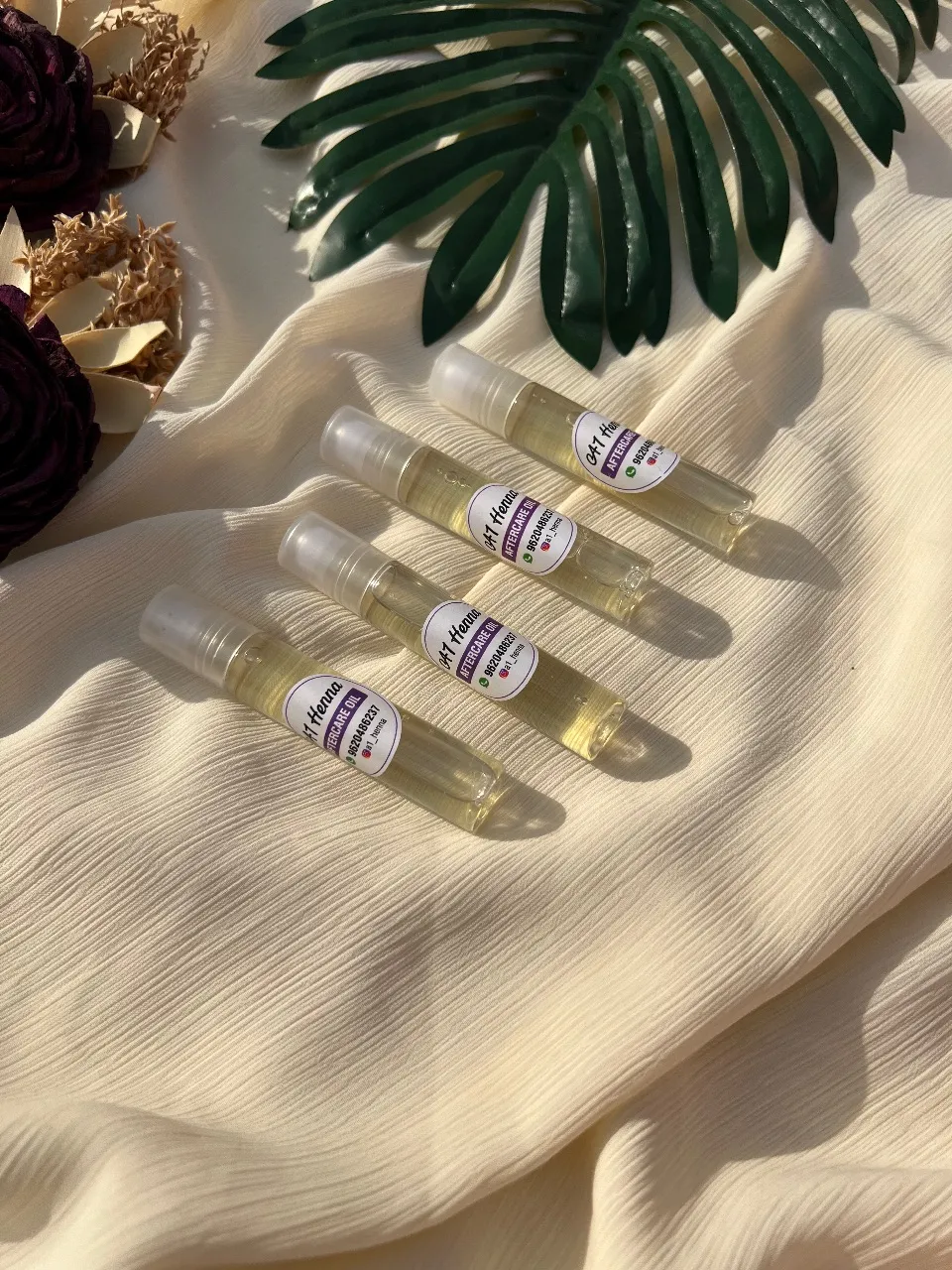 Mehndi AftercareHenna Aftercare OilHelps darken the mehndi stain₹50View product →
Timeline by body area
The same paste, applied at the same time, develops at different rates:
| Area | Day 1 | Day 2 | Fades by |
|---|---|---|---|
| Palms, fingertips | Orange | Deep maroon, almost red-black | ~2 weeks |
| Tops of feet, toes | Orange | Deep maroon | ~2 weeks |
| Back of hands | Pale orange | Rich brown | 10–12 days |
| Forearms, ankles | Faint orange | Warm brown | ~1 week |
| Upper arms, shoulders | Very faint | Light brown | 5–7 days |
So don't compare your forearm to a photo of someone's palm — different canvas.
Normal vs worth-worrying
- Normal: orange for the first day, obvious deepening by day two, even tone within the design.
- Not normal: still bright orange or blotchy after 48 hours (usually the cone or aftercare); any redness, itching or blistering (stop — possible reaction to an adulterated cone).
Photographing the change
If you want to document it (useful for artists building a portfolio): shoot the same hand in the same soft daylight at removal, 24 hours and 48 hours, against a plain background. The day-two photo is the one that shows your true stain.
Does the paste colour predict the stain?
A little. A well-rested, dye-rich paste often looks deep khaki-green to brown and smells earthy; a weak or old paste looks flat brown or grey. But the real test is a smear on your inner arm — if it leaves a clear orange mark within a minute, the paste is releasing dye. See why is my henna stain light.
How the timeline differs for instant cones
Instant cones are formulated to show colour faster, so you'll see brown within hours rather than a full day — but they usually peak lighter and fade sooner (days, not weeks). Natural henna trades speed for depth and longevity.
When to book bridal mehndi around this timeline
Because natural henna peaks 24–48 hours after removal, brides apply two days before the wedding so the colour is at its richest on the day and holds through the following functions. Apply too early and it's already fading by the reception; too late (same day) and the photos catch a pale orange design. See the full plan in bridal mehndi timeline & aftercare.
Why the same design looks different in two photos
Lighting, not the henna. A fresh stain shot under warm indoor light looks orange; the same design in daylight a day later looks brown; in a flash photo it can look almost black. When comparing your stain to a reference online, remember you're also comparing camera settings.
When to judge the result
Give it a full 48 hours before deciding a stain is "light". If it's still orange or patchy after two days, the cause is almost always the cone or the aftercare, not bad luck — see why is my henna stain light and how to get a dark stain next time.
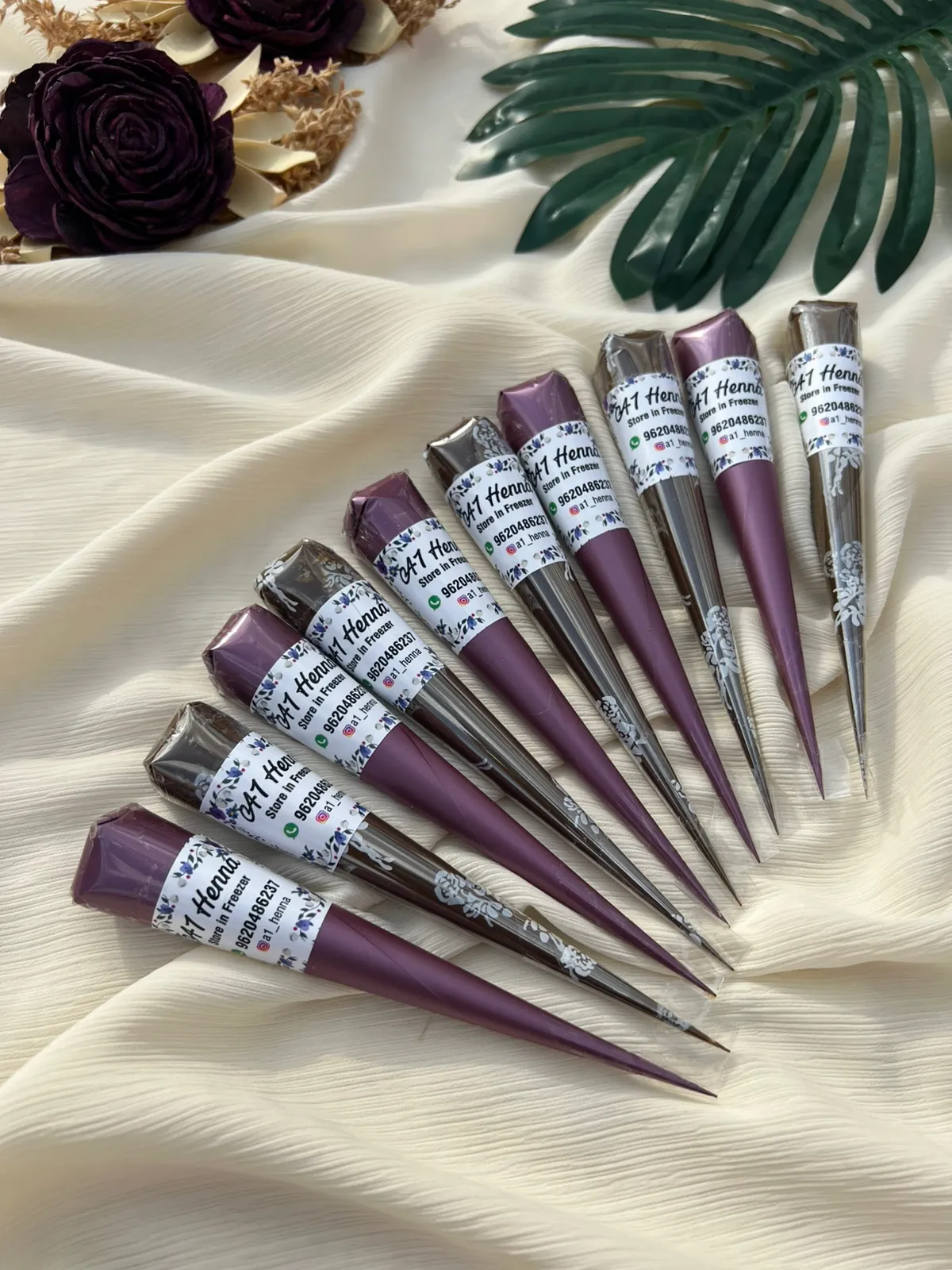 Henna ConesOrganic Henna ConesOrganic henna paste * Rich, natural henna stain * Halal · No PPD * Fine tip for detailed designs * Freshly hand-rolled in Bengaluru₹40View product →
Hennaya hand-rolls fresh, natural cones in Bangalore with delivery across BTM Layout, Jayanagar, Koramangala and HSR Layout.
Questions people ask
How long does henna take to reach its final colour?
24 to 48 hours after you remove the paste. It looks pale orange at first and oxidises to brown, then deep maroon, peaking around day two.
Why is my henna orange and not brown yet?
That's normal for the first several hours. The dye (lawsone) needs air and body heat to oxidise and darken. If it stays orange after 48 hours, the powder was likely old, coarse, or washed too soon.
How long does a henna stain last?
Typically one to two weeks. It fades as the top layer of skin naturally exfoliates, starting at the fingertips and high-contact areas.
How long does mehndi last on hands?
A well-cared-for natural henna design lasts about 1–2 weeks on the hands, and up to three weeks on the palms and fingertips where the skin is thickest. It fades gradually as the top layer of skin exfoliates.
How many days does mehndi last?
Roughly 7 to 14 days on hands, and up to 18–21 days on palms, fingertips and soles. The first few days it looks its darkest; after that it lightens a little each day as the skin renews. Feet usually outlast hands because there's less washing and friction.
How long does instant mehndi last?
About the same as regular henna once the stain has developed — 1 to 2 weeks — because it's still lawsone staining the skin. 'Instant' only means the paste releases its dye faster, so you can take it off in 30–60 minutes instead of leaving it on for hours. It doesn't fade any quicker. See instant vs organic henna cones.
How long does a henna tattoo last?
A henna 'tattoo' is a skin stain, not a real tattoo, so it's temporary — about 1 to 2 weeks, fading gradually. Anything sold as a henna tattoo that stays jet-black for weeks is 'black henna' with PPD and is unsafe: natural henna vs black henna.
Why does my mehndi fade so fast?
Usually because it's on a high-friction, frequently-washed area, or because the stain never developed dark in the first place — an old cone, too little time on the skin, or washing within 12 hours of removal. A pale stain has less colour to lose, so it seems to vanish quickly. Full checklist: why is my henna stain light.
Does mehndi last longer on feet than hands?
Often, yes. The tops of the feet and the ankles have thick skin and less daily friction than hands, so a foot design can hold its colour a little longer — though shoes and walking wear the edges.
Keep reading
Henna for Hair: Real Benefits, Simple Method, Honest Limits
What henna actually does for hair — colour, strength, a calmer scalp — a simple mix, how to apply it, and what it won't do. Fresh hair henna, Bangalore delivery.
How to Get a Dark Henna Stain: 12 Tips That Work
The exact routine our Bangalore studio uses for a deep maroon stain — right cone, heat, timing, aftercare. Do these and even a simple design turns rich.
Henna Stains on Clothes? How to Get Them Out
Henna paste on your outfit, carpet or sofa? Here's how to actually get a fabric stain out — fast for fresh drips, and what to try if it's already set.