
Henna vs Chemical Hair Dye: An Honest Comparison
Henna and oxidative dye do different jobs. Colour range, damage, grey coverage, reversibility, cost and safety — laid out plainly, so you pick the right one.
By Aliya, Founder, Hennaya
6 August 2026 · Updated 7 October 2026 · 4 min read

Henna and chemical hair dye get compared as if they're rivals, but they're really different tools. Here's a plain comparison so you can pick the right one.
Henna is a plant stain that coats and warms the hair; oxidative ("chemical") dye opens the cuticle and deposits synthetic colour inside the shaft. Henna is gentler and strengthening but limited to warm tones; chemical dye covers the full colour range including lighter and cooler shades.
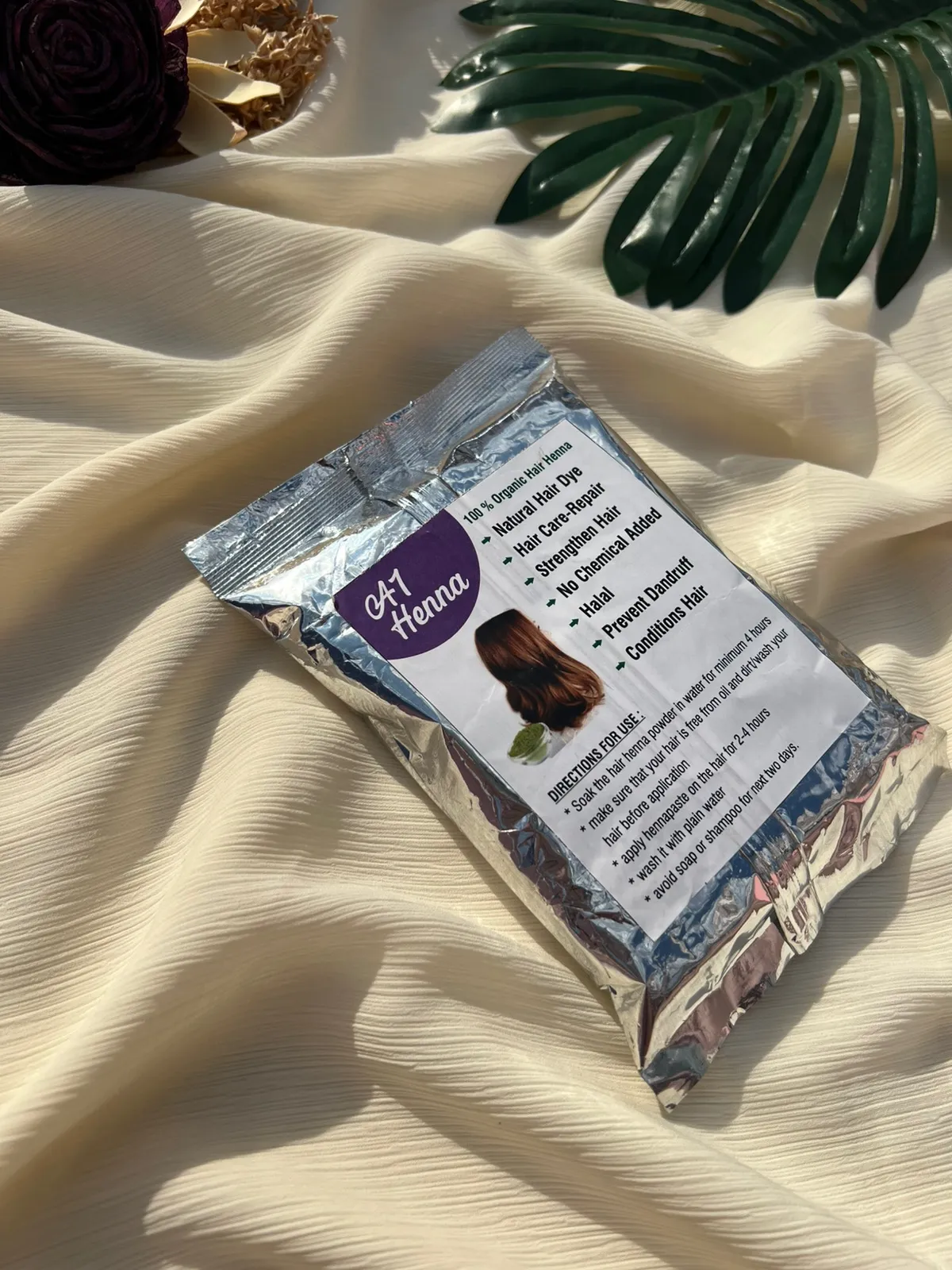 Hair HennaHerbal Hair HennaOrganic henna powder for hair₹80View product →
Side by side
| Henna (pure) | Chemical (oxidative) dye | |
|---|---|---|
| Colour range | Copper → red → (with indigo) brown → near-black. No blonde, no ash, can't lighten. | Full range including blonde, ash, cool tones; can lift/lighten |
| Effect on hair | Coats the shaft — usually stronger, smoother, less frizz | Opens the cuticle — can dry and weaken over time |
| Scalp | Generally gentle; many find it soothing | Can irritate; PPD allergy risk (patch test) |
| Grey coverage | Yes, but copper on grey unless you add indigo (two steps) | Yes, full range, one step |
| Application time | 2–3 hrs (plus dye-release rest); indigo adds ~1 hr | 30–45 min |
| Predictability | Depends on your base colour and grey % — strand test | Very predictable from the shade chart |
| Reversibility | Hard — grows out, doesn't wash out | Easier to correct/recolour |
| Cost | Low; one pack does many applications | Higher per application, ongoing |
| Maintenance | Every 3–4 weeks for roots; colour is cumulative | Every 4–6 weeks for roots |
When henna is the better choice
- You want warm red or brown tones and don't need to go lighter.
- Your priority is hair and scalp health — henna strengthens rather than damages (does henna damage hair).
- You have a PPD allergy or react to chemical dye.
- You want low cost and don't mind a longer application.
- You want the conditioning and shine benefits alongside colour.
When chemical dye is the better choice
- You want blonde, ash, cool brown, or to lighten your natural colour.
- You need fast, predictable, uniform grey coverage in one step.
- You change colour often and need it to be reversible.
- You're not willing to commit to a semi-permanent-to-permanent result.
The overlap zone: switching between them
Pure henna and pure indigo are usually compatible with later salon colour — but strand test and tell your stylist. The real hazard is "compound" henna with metallic salts, which reacts badly with peroxide. Only use henna whose label lists only Lawsonia inermis (and Indigofera tinctoria). See natural henna vs "black henna".
Getting brown or black with henna
Two-step: henna first (copper base), then indigo mixed with warm water, left 30–45 minutes, no shampoo for 24–48 hours while it oxidises. Full method in henna for hair.
Cost over a year
A rough comparison for root touch-ups every 3–4 weeks:
| Henna (+ indigo) | Salon single-process colour | |
|---|---|---|
| Per application | Low — one pack lasts many sessions | Higher — product + chair time |
| Over a year (~13 touch-ups) | A few packs of powder | Substantially more |
| Hidden costs | Longer application time (your hours) | Bond-repair treatments, trims for dryness |
Henna's trade-off is your time, not your money.
A sensible way to decide
- Want warm tones, healthier hair, low cost, and you're okay with a longer sit and a semi-permanent result → henna (see does henna damage hair to put the myths to rest).
- Want any colour including lighter/cooler, fast and predictable, easy to change → chemical dye.
- Undecided? Try henna on a hidden strand first — it's reversible in the sense that you simply stop and grow it out, and you'll know within one application whether the tone suits you.
Buying
Hennaya supplies single-ingredient herbal hair henna in Bangalore with delivery across Jayanagar, JP Nagar, HSR Layout and Whitefield. Message us on WhatsApp to talk through your hair colour goals with founder Aliya's team.
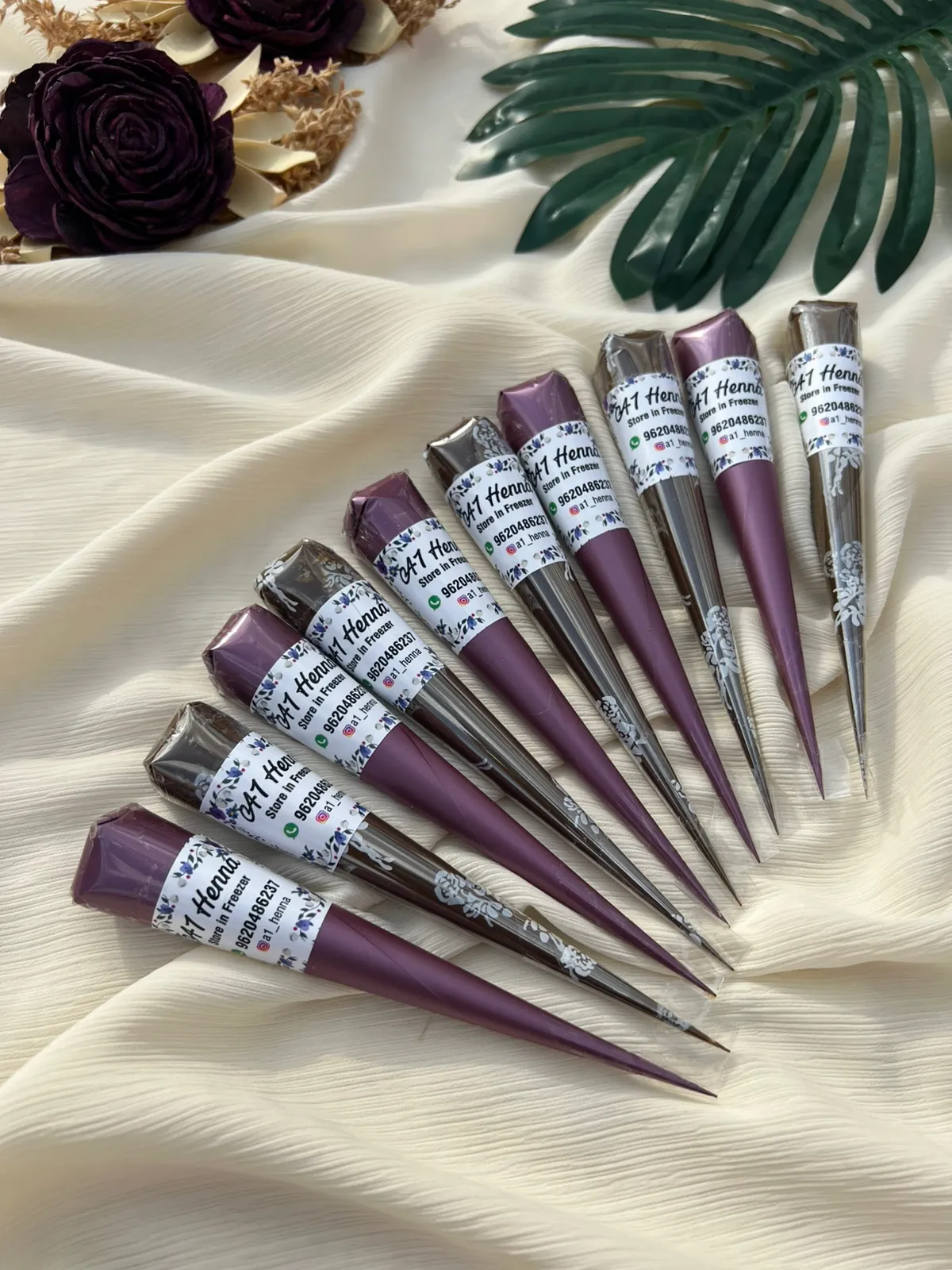 Henna ConesOrganic Henna ConesOrganic henna paste * Rich, natural henna stain * Halal · No PPD * Fine tip for detailed designs * Freshly hand-rolled in Bengaluru₹40View product →
Questions people ask
Is henna better than chemical hair dye?
It depends what you want. Henna wins on hair health, scalp gentleness and cost, and gives warm red-to-brown tones with strengthening as a bonus. Chemical dye wins on colour range (blondes, ash, cool tones, going lighter), speed and predictability.
Does henna cover grey as well as chemical dye?
Henna covers grey, but pure henna turns grey hair copper-red, not brown or black. For natural brown-to-black grey coverage you follow henna with indigo (a two-step process). Chemical dye covers grey in one step across the whole colour range.
Can I switch from chemical dye to henna, or the other way?
Henna over previously-dyed hair is usually fine with a strand test. Going from henna to chemical dye is where care is needed — pure henna and indigo are generally compatible, but 'compound' henna with metallic salts can react with salon chemicals, so always strand test and tell your stylist.
Keep reading
Henna for Hair: Real Benefits, Simple Method, Honest Limits
What henna actually does for hair — colour, strength, a calmer scalp — a simple mix, how to apply it, and what it won't do. Fresh hair henna, Bangalore delivery.
How to Get a Dark Henna Stain: 12 Tips That Work
The exact routine our Bangalore studio uses for a deep maroon stain — right cone, heat, timing, aftercare. Do these and even a simple design turns rich.
Henna Stains on Clothes? How to Get Them Out
Henna paste on your outfit, carpet or sofa? Here's how to actually get a fabric stain out — fast for fresh drips, and what to try if it's already set.