
Full Hand Mehndi: How to Plan Full Coverage
How a full-hand or full-arm design is built — the structure, how long it takes, keeping it symmetrical, and getting an even dark stain across the whole area.
By Aliya, Founder, Hennaya
12 September 2026 · Updated 7 October 2026 · 4 min read

A "full hand" mehndi design covers the whole hand — front, back, fingers, and often up the forearm to the elbow. It's the bridal and festival showpiece. Here's how it's structured and how to get it right.
The structure
However dense it looks, a full-hand design is built in layers:
- Anchors. One or two strong focal points — a palm mandala, a large flower or paisley cluster on the back of the hand.
- Connectors. Vines, chains and trailing motifs that link the anchors and flow toward the fingers and wrist.
- Fingers. Each finger gets tips, bands and small motifs, echoing the main design.
- Borders. A wrist cuff, and an upper border where the forearm coverage ends (or an armband at the elbow).
- Fills. Jaali (net), dotwork and tiny leaves fill the gaps — with some bare skin left on purpose so the design breathes and reads in photos.
The same four-to-five layer method underlies every style — see Arabic vs Indian vs Indo-Arabic mehndi and mandala mehndi: how to draw a clean circular design.
Coverage options
| Coverage | Rough time (both hands) |
|---|---|
| Hands, front & back, to wrist | 2–4 hrs |
| Hands + forearm to mid-arm | 3–5 hrs |
| Hands + full arms to elbow + feet | 5–7 hrs |
Feet add roughly another 1–2 hours. This is why bridal application starts early in the day or the day before — see the bridal mehndi timeline.
Keeping it symmetrical
- Work both hands in parallel, section by section — don't finish one and then start the other.
- Match the big landmarks: anchor position, where borders begin and end, finger plan.
- Let the tiny fillers differ — nobody notices those, and chasing perfect symmetry there just slows you down.
- Rotate your hand rather than reaching across wet paste.
Getting an even dark stain across a large area
The bigger the design, the more places a stain can go patchy. To keep it even:
- Use fresh, consistent body-art-quality cones — don't switch to an older cone halfway.
- Apply to clean, oil-free skin — no lotion, no sunscreen.
- Keep paste thickness consistent; a thin, dried-out patch transfers less dye.
- Once touch-dry, wrap loosely with tissue and tape so nothing lifts.
- Expect the palm and fingertips to come out darkest and the forearm a shade lighter — that's the skin, not a mistake (why).
- Full aftercare: how to get a dark henna stain.
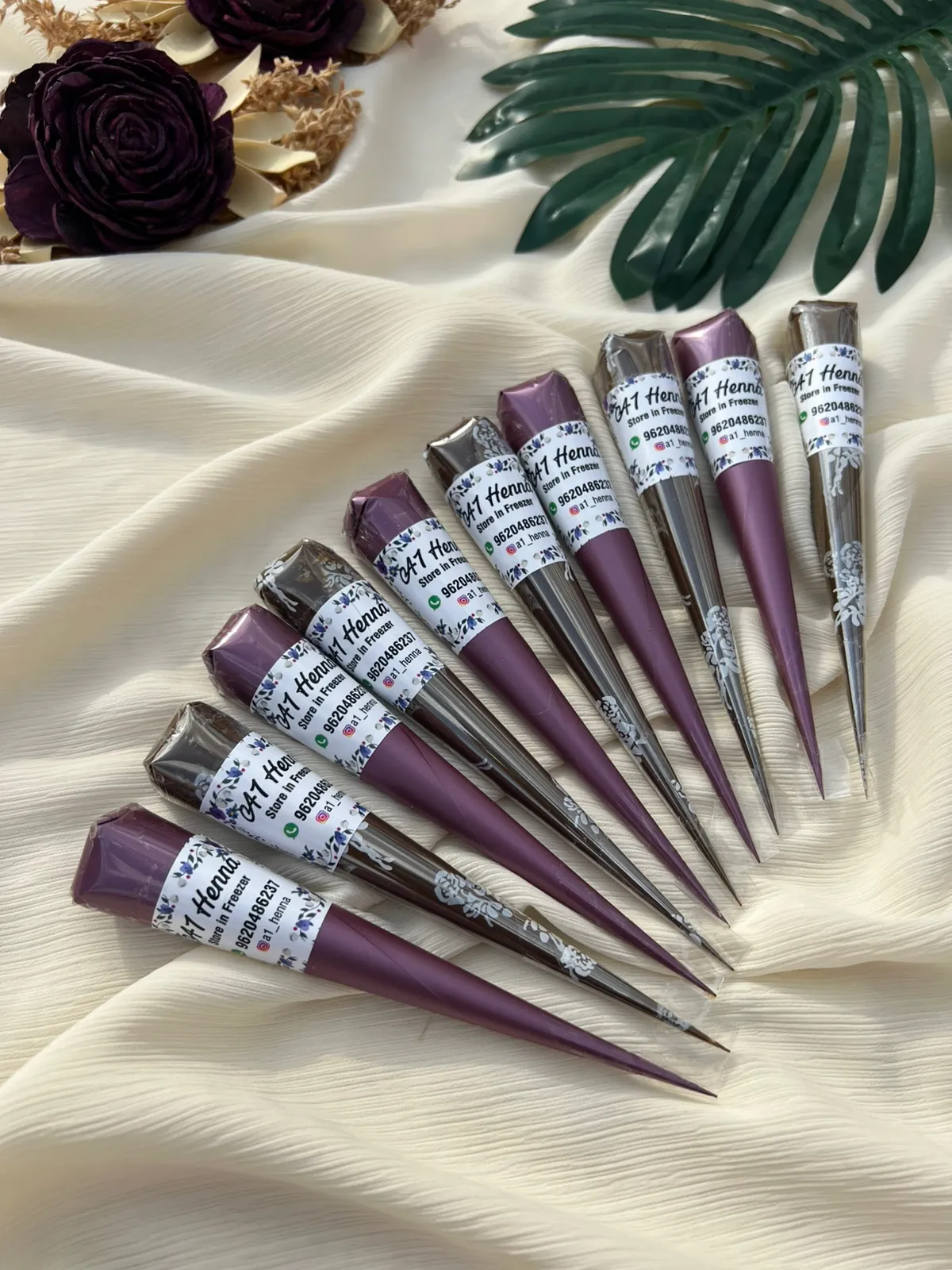 Henna ConesOrganic Henna ConesOrganic henna paste * Rich, natural henna stain * Halal · No PPD * Fine tip for detailed designs * Freshly hand-rolled in Bengaluru₹40View product →
Order of application
Work in a sequence that keeps your hand off wet paste:
- Anchor motifs first — palm centre, back-of-hand focal point.
- Connectors radiating outward toward fingers and wrist.
- Fingers, base to tips.
- Forearm coverage, working up from the wrist.
- Borders — wrist cuff, upper armband.
- Fills last, once earlier sections have set slightly.
Do the same order on both hands so they finish as a pair.
How much bare skin to leave
The instinct with "full" coverage is to fill everything. Resist it. A design with 20–30% bare skin — around motifs, between fills, along the edges — photographs with contrast and depth. Solid fill everywhere reads as a grey mass in photos. Mix solid areas, outline-only shapes and bare skin in every section.
Styles for full coverage
- Rajasthani / traditional Indian — the densest: figures, peacocks, jaali, fine dotwork, coverage to the elbow. The classic bridal look.
- Indo-Arabic — full area but airier: bold florals with negative space, detailed anchors and cuffs.
- Mughlai — medallion-heavy, ornate linework.
Compare them in Arabic vs Indian vs Indo-Arabic mehndi, and see what's current in bridal mehndi design trends.
Practising toward full hands
Don't start here. Build up: clean lines and motifs first (easy mehndi designs for beginners), then a full back of one hand (back-hand and finger design ideas), then a matched pair, then add the forearm. Do at least one full pair of hands a week to build the stamina for a long sitting — see how to become a henna artist in India.
 Henna ConesPracticing Henna ConesStain-free practice paste₹10View product →
Hennaya makes natural cones and stencils in Bangalore with delivery across Jayanagar, BTM Layout, HSR Layout, Koramangala and Indiranagar, and teaches full-coverage bridal work in its henna classes.
Questions people ask
How long does a full hand mehndi design take?
Front and back of both hands to the wrist takes roughly 2–4 hours. Full coverage to the elbow with feet can take 5–7 hours, which is why bridal application often starts early or the day before.
How do you keep a full hand mehndi design symmetrical?
Build both hands in parallel, section by section, rather than finishing one hand then starting the other. Match the big landmarks — where the central motif sits, where borders start and stop — and let small fillers vary.
Why is part of my full hand design darker than the rest?
The palm and fingertips have thicker skin and stain darker than the back of the hand and forearm. That's normal. Uneven colour within one area usually means uneven paste thickness or the design was smudged while wet.
What is a pocket mehndi design?
A pocket design fills a single bounded area — often a diagonal "pocket" across one corner of the back of the hand — with a dense motif, leaving the rest of the hand bare. It's a modern, graphic look built on negative space.
What counts as half-hand mehndi?
Half-hand coverage runs from the fingertips to about mid-hand or the wrist, decorating one clear zone and stopping with a defined edge, instead of covering the whole hand and forearm.
Is pocket mehndi good for a wedding guest?
Yes. It photographs full because the covered area is dense, but it applies in 20–30 minutes, so it's ideal when you're a guest at a sangeet, engagement or reception.
Do you deliver henna cones for these designs in Bangalore?
Yes — Hennaya delivers natural cones across BTM Layout, Jayanagar, Koramangala, HSR Layout and all of Bengaluru, plus pan-India shipping.
Keep reading
Craft Your Unique Mehndi Design
Empower yourself by crafting personalized henna art that reflects your individuality. Discover how to embrace your creativity!
Bail Mehndi: Vine & Trail Designs for Hands
What bail mehndi is, the main vine layouts for hands and fingers, and how to draw a clean trailing bail design that works for daily wear or a festival day.
Mehndi Motif Meanings: Peacock, Lotus & More
What does a peacock, paisley or lotus actually mean in mehndi? A plain guide to the symbolism behind the motifs artists draw most, and when each one fits.