
Which Hand Goes First for Mehndi? The Tradition
Left or right — does it actually matter? The tradition behind mehndi hand order, the practical reason it stuck, and whether it changes your stain at all.
By Aliya, Founder, Hennaya
5 October 2026 · 5 min read

You're about to sit down for mehndi and someone asks: "left hand first, right?" Most Indian mehndi ceremonies start with the left hand — it's the common tradition, though the honest answer is that it doesn't change your stain either way, and plenty of artists and brides do it the other way round without a second thought.
Here's where the custom comes from, and the one reason it's actually worth following.
The tradition
In many households, the left hand is treated as the "receiving" hand — the one you'd use to accept a gift, a blessing or prasad — while the right is the "giving" or active hand. Starting the mehndi on the left fits that symbolism: it's the hand meant to receive the blessing the design represents. This varies a fair bit by region and family, so don't be surprised if the family you marry into does it differently — there's no single rule that applies everywhere in India.
The practical reason it stuck
Most people are right-handed, and a hand covered in wet henna paste is out of action for hours. Starting with the left (non-dominant) hand means your right hand stays free the longest — you can still eat, hold your phone, or help with last-minute wedding jobs while the left dries. By the time the right hand goes under the cone, you've got nothing left to do but sit anyway, so it costs you nothing.
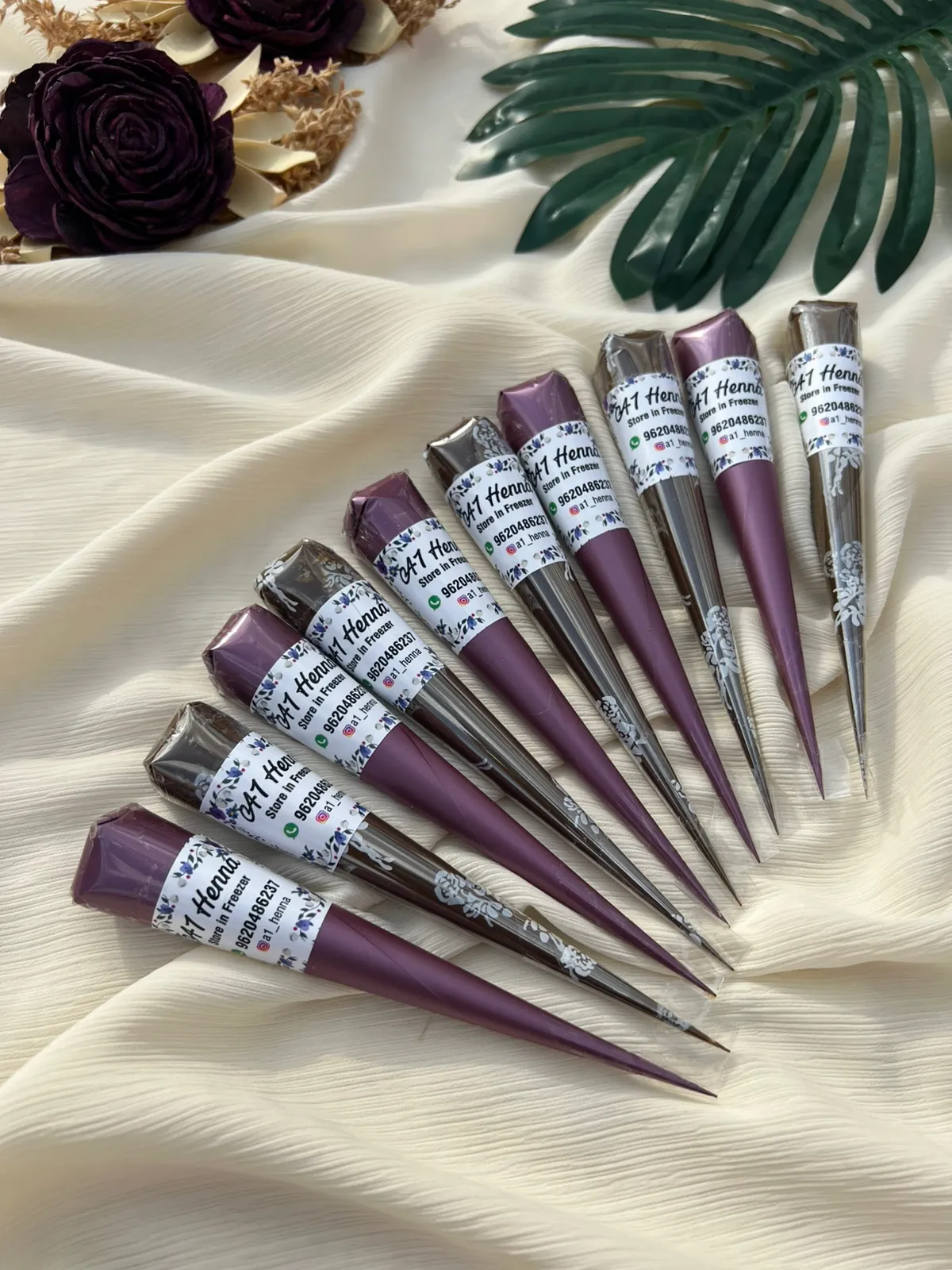 Henna ConesOrganic Henna ConesOrganic henna paste * Rich, natural henna stain * Halal · No PPD * Fine tip for detailed designs * Freshly hand-rolled in Bengaluru₹30View product →
Artists booking a full bridal design often plan it the same way for exactly this reason — see how a session is usually structured in our bridal mehndi timeline.
Does it affect the colour at all?
No. Henna stains skin through a dye molecule called lawsone binding to keratin in the outer skin layer — that chemistry doesn't care whether it's the first hand or the last. What genuinely affects colour is the paste quality, how long it sits on the skin, warmth, and the aftercare routine afterwards, not the order the hands went in. If you want a genuinely darker stain, that's covered start to finish in how to get a dark henna stain — hand order isn't on that list for a reason.
For artists working on more than one person
The same logic scales up at a family mehndi sitting: start with whoever needs a hand free longest — often the bride's mother or a relative who's coordinating the event — and save the person with nowhere else to be (usually the bride) for last, since she'll be sitting for both hands regardless. If you're new to booking clients, our pricing your mehndi work guide has more on structuring a multi-person sitting.
There's a second practical reason experienced artists sequence clients this way: it staggers the drying window across the whole event. If everyone started at the same time, the room would hit "everyone needs to sit still" all at once with no one free to help serve food or manage the space. Starting people in a rotation means there's always someone with at least one free hand to keep things running.
What if you're right-handed and want your right hand covered first anyway?
Nothing stops you — there's no rule enforcing this beyond custom and convenience. Some brides specifically want their right hand (often the one that'll wear the wedding ring and show most in photos) done first while they're fresh and the artist's hand is steadiest, then treat the left as the "easier" second hand. Either approach is fine; pick whichever makes more sense for your day.
What actually matters more than hand order
A handful of things make a bigger real difference to how the day goes:
- Do a patch test 48 hours ahead, regardless of which hand — see our patch test guide.
- Keep your dominant hand's design simpler if you genuinely need to use it mid-event — fine detail takes longer to dry.
- Plan bathroom and phone breaks around the paste drying time, not the hand order — a design needs 4–6 hours minimum to stain well.
- Ask your artist which motifs they'll draw first if you want to know the meaning behind what's going on your hand — our mehndi motif meanings guide breaks down the common ones.
Does it apply to grooms too?
Grooms who get mehndi (usually a small, subtle motif rather than a full design) tend to follow the same non-dominant-hand-first logic if they're getting both hands done, though it's far less of a fixed ritual for men than it is for brides. Our mehndi designs for men guide covers what grooms typically choose.
Why some areas of the hand stain darker regardless of order
One thing that genuinely does vary — but has nothing to do with left or right — is where on the hand the design sits. Palms and fingertips have thicker skin and naturally stain darker than the back of the hand, no matter which hand goes first or last. If you want your first hand to look extra rich for early photos, ask your artist to weight some coverage toward the palm rather than worrying about which side it's on.
Left, right, or does it matter?
If your family has a tradition, follow it — it's part of the occasion. If nobody's told you one, start with your non-dominant hand and get on with your day; the stain won't know the difference, and neither will anyone looking at the photos in a week.
Booking in Bengaluru
Aliya and the Hennaya team take bridal and family bookings across BTM Layout, Jayanagar, Koramangala and HSR Layout, and hand-roll fresh cones for same-day delivery across Bengaluru if you're doing your own hands at home.
Questions people ask
Which hand is mehndi applied on first?
Most artists and brides do the left hand first, then the right. It's partly tradition and partly practical — most people are right-handed, so finishing the non-dominant hand first means the working hand stays free for as long as possible.
Does it matter which hand you start with for the stain to come out dark?
No. Henna's dye (lawsone) binds to skin the same way regardless of which hand goes first or last — colour depends on the paste, how long it sits, and aftercare, not on hand order.
Why is the left hand considered auspicious for mehndi?
In many households the left hand is linked to receiving — the hand you'd use to accept a gift or blessing — while the right is the 'giving' or working hand, so covering the left first fits that symbolism. It varies by family and region, and isn't a fixed rule everywhere.
Does the order matter if I'm not the bride?
Not really — guests and family usually just pick based on which hand they can spare first for eating, phone use or helping out, especially at a group mehndi sitting.
Keep reading
The History of Henna & Mehndi: 4,000 Years, Briefly
Henna body art is thousands of years old. A short history of the plant, how it spread across three continents, and how the mehndi tradition grew from it.
Henna vs Mehndi: Are They the Same Thing?
Yes — henna and mehndi are the same plant and the same dye; only the word changes by region. When to use each word, and why "black henna" is neither.
How to Apply Mehndi on Yourself (Without the Smudges)
Doing your own mehndi is very doable with the right setup. How to plan the design, handle your non-dominant hand, work in order, and keep it smudge-free.