
Henna Artist Starter Kit: What You Need (and What You Don't)
Everything a new mehndi artist actually needs to take bookings — cones, tips, aftercare, comfort gear — and the 'essentials' that are a waste of money.
By Aliya, Founder, Hennaya
29 September 2026 · Updated 7 October 2026 · 5 min read

A henna kit is simple. The mistake new artists make is buying novelty items and skimping on the one thing that matters — the paste. Here's a checklist built from what we actually hand students on day one of our Bangalore training batches.
The non-negotiables
1. Body-art-quality henna cones
This is 80% of your result. Buy fresh, finely sifted, natural henna cones with a stated batch date. Cheap "compound" cones give a flat, patchy stain no aftercare can rescue. Keep spares — cones dry out.
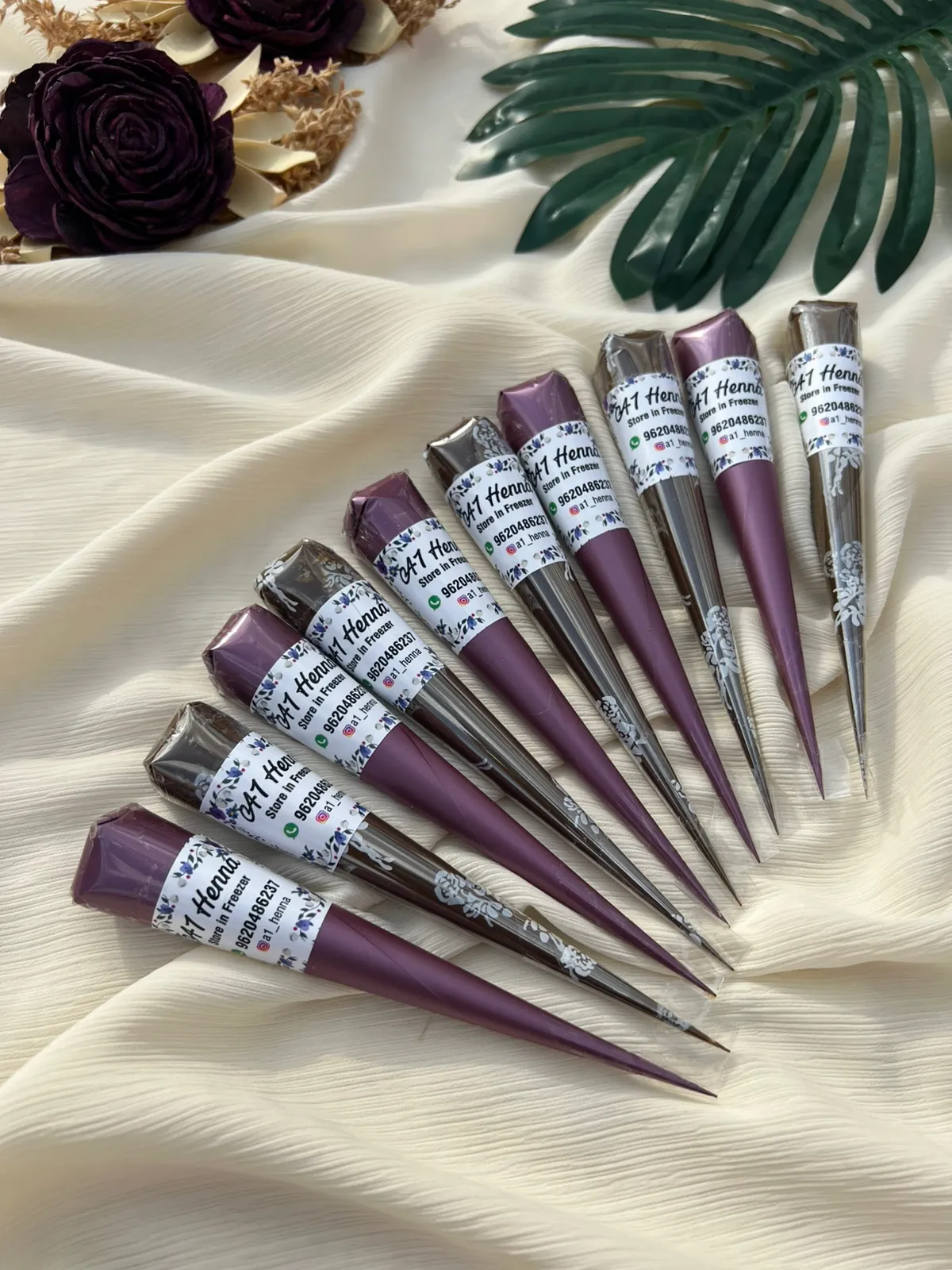 Henna ConesOrganic Henna ConesOrganic henna paste * Rich, natural henna stain * Halal · No PPD * Fine tip for detailed designs * Freshly hand-rolled in Bengaluru₹40View product →
2. Practice cones
Line drills, warm-ups before a booking, and teaching yourself new motifs should be done on cheap practice cones, not your good stock. Thin-tipped, firm paste, no guilt about waste.
3. Nail cones / fine-tip cones
For crisp outlines, fine borders and detail work you want a narrower tip than a standard cone. A few nail cones cover this.
4. Aftercare
Every client leaves with advice and, ideally, a sample. Carry henna aftercare oil and a balm; a light seal after the paste is scraped is what turns an orange stain deep maroon. Our dark stain guide is worth sending clients home with.
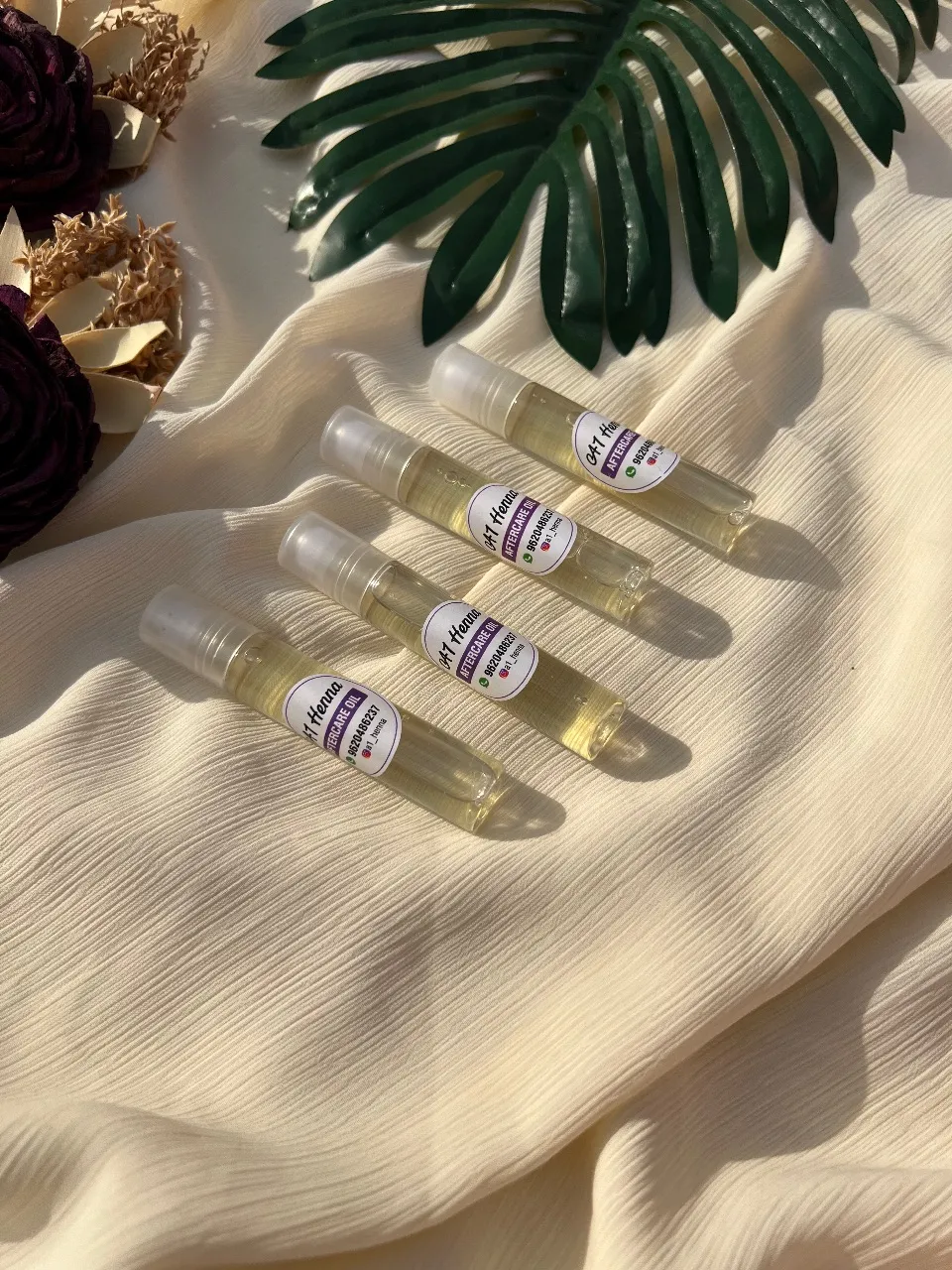 Mehndi AftercareHenna Aftercare OilHelps darken the mehndi stain₹50View product →
5. Consistency and mixing supplies (if you roll your own)
Fine sieve, mixing bowl, spatula, cling film, cone rolling sheets or pre-cut cellophane, essential oil (cajeput/lavender/tea tree), lemon juice or tea. See how to make henna paste at home.
Comfort and hygiene gear
- Tissues and cotton pads — cleaning skin, wiping mistakes.
- Micropore tape — lifting stray paste, taping stencils.
- Small torch or clip lamp — warmth speeds dye uptake, and bridal sittings often run into low light.
- Folding stool + cushion — your back will thank you after a 5-hour bridal set.
- Hand sanitiser and a small bin bag — clean up before and after; never sanitise a fresh design though.
- Reference tablet or printed design sheets.
- Business cards / a QR to your Instagram.
Nice to have (buy later)
- Reusable mehndi stencils — speed for party stalls, kids' events and matching bridesmaid designs.
- Jagua gel for blue-black temporary work.
- A ring light for portfolio photos.
- Cone stand and travel case.
- A small heat source (clip lamp) for cold-weather bookings — warmth speeds dye uptake.
- Aftercare sachets to hand clients — a cheap way to protect your reputation on the two-day colour.
Sealants and finishing products
Once you're taking bookings you'll want a way to protect a design in the hours after the paste comes off. A henna sealant spray or a balm lets a client leave your chair and get on with their day without the fresh stain rubbing off on clothes. It's optional for practice, near-essential for events where people won't sit still afterwards — worth having our fabric stain removal guide bookmarked for the client who ignores the advice anyway.
Building the kit in stages
- Learning: practice cones + a few good cones + aftercare oil. That's it.
- First bookings: add nail cones, stencils, comfort gear, aftercare sachets.
- Regular work: bulk cone orders on a schedule, sealant spray, travel case, backup stock.
- Bridal: the finest cones you can get, extra spares, a second set of everything so a leak or a clog never stops a sitting.
Skip these
- "Black henna" cones — dangerous, illegal to pass off as henna in many places, and a reputation-killer. Read why real henna is never black.
- Glitter-and-gemstone kits before you can draw a clean line.
- Bulk buying paste you haven't tested for stain quality.
- Expensive branded "artist cases" — a clean cloth bag and a few zip pouches do the same job for now.
How much it costs to start
You can build a genuine working kit for ₹800–₹2,000:
| Item | Rough cost |
|---|---|
| 12 body-art-quality cones | ₹350–₹700 |
| 6 practice cones | ₹120–₹250 |
| 3–4 nail / fine-tip cones | ₹100–₹200 |
| Aftercare oil + balm | ₹150–₹400 |
| Tissue, tape, cotton, torch, stool cushion | ₹150–₹450 |
Everything else — stencils, jagua, a ring light, a travel case — is bought later out of booking income, not before your first job.
Storing and transporting cones
Henna loses dye strength with heat and time. Keep spare cones in the freezer, move a few to the fridge a week ahead, and bring a cone to room temperature (about 15–20 minutes) before you pipe with it — cold paste drags and skips. On a booking, carry cones in a small insulated pouch, tips up, and snip the tip only when you're ready to work. Label each batch with its date so you always use the oldest first.
A restocking rhythm
Once bookings are regular, order on a schedule rather than in a panic the night before a function. Track how many cones an average pair of hands uses (usually one to two for festival work, three to five for bridal) and keep at least two bookings' worth of fresh stock at all times, plus practice cones so you never warm up on your good henna.
Where Bangalore artists restock
We hand-roll cones in New Gurappana Palya and deliver across BTM Layout, Jayanagar, JP Nagar, Koramangala and HSR Layout, the same day, with courier shipping for artists outside the city. Order a small batch, test the stain on your own skin, then buy in volume once you trust it — our buyer's guide to henna cones explains exactly what to check.
Once your kit is sorted, the next question is money — see how to price your mehndi work.
Questions people ask
How much does a basic henna kit cost in India?
A reliable starter kit — a dozen body-art-quality cones, a few practice cones, nail cones, aftercare oil and basic comfort gear — costs roughly ₹800–₹2,000. You don't need anything expensive to begin.
Should I buy pre-made cones or roll my own?
Start with good pre-made cones so you can focus on line work. Learn to roll your own later — it gives you control over paste freshness and tip size, which matters for bridal detail.
Do I need jagua or white henna to start?
No. Master natural brown henna first. Jagua (blue-black) and white body paint are add-ons you can offer once your core skills are solid.
Keep reading
How to Become a Henna Artist in India: First Cone to Paid
The step-by-step path from your first cone to paid bookings — skills to build, the kit you need, how to practise, what to charge, and landing your first clients.
Practice Henna Cones: Learn Mehndi Faster, Cheaper
Practice cones make learning mehndi low-pressure and low-cost. How to use them for drills, what to practise in what order, and when to switch to your good cones.
How to Price Your Mehndi Work in India (Fairly)
A simple formula for festival, party and bridal rates that covers materials, hours, travel and skill — plus the price bands artists actually charge in Bangalore.