
✍️ In Aliya's Own Words
Founder's NotesWhy I Train Women to Become Henna Professionals
Aliya on why teaching became as important as the art itself — turning a skill women already love into a real, confident income, one 20-day batch at a time.
By Aliya, Founder, Hennaya
6 October 2026 · 5 min read

I get asked a lot why a henna business spends so much energy on teaching. Cones are what pay the bills — teaching takes time away from the chair. Here's my honest answer. Training women to become henna professionals is the part of Hennaya I'm proudest of, because a skill someone can actually earn from changes more than a design on a hand ever will.
It started with one simple observation
Almost every woman I've ever met already knows a little henna. She did her sister's hands for a wedding, or her own for Eid, or she just likes doodling motifs in a notebook. That's real, usable skill sitting unused — because nobody ever showed her the part that turns "I can do this" into "I get paid for this."
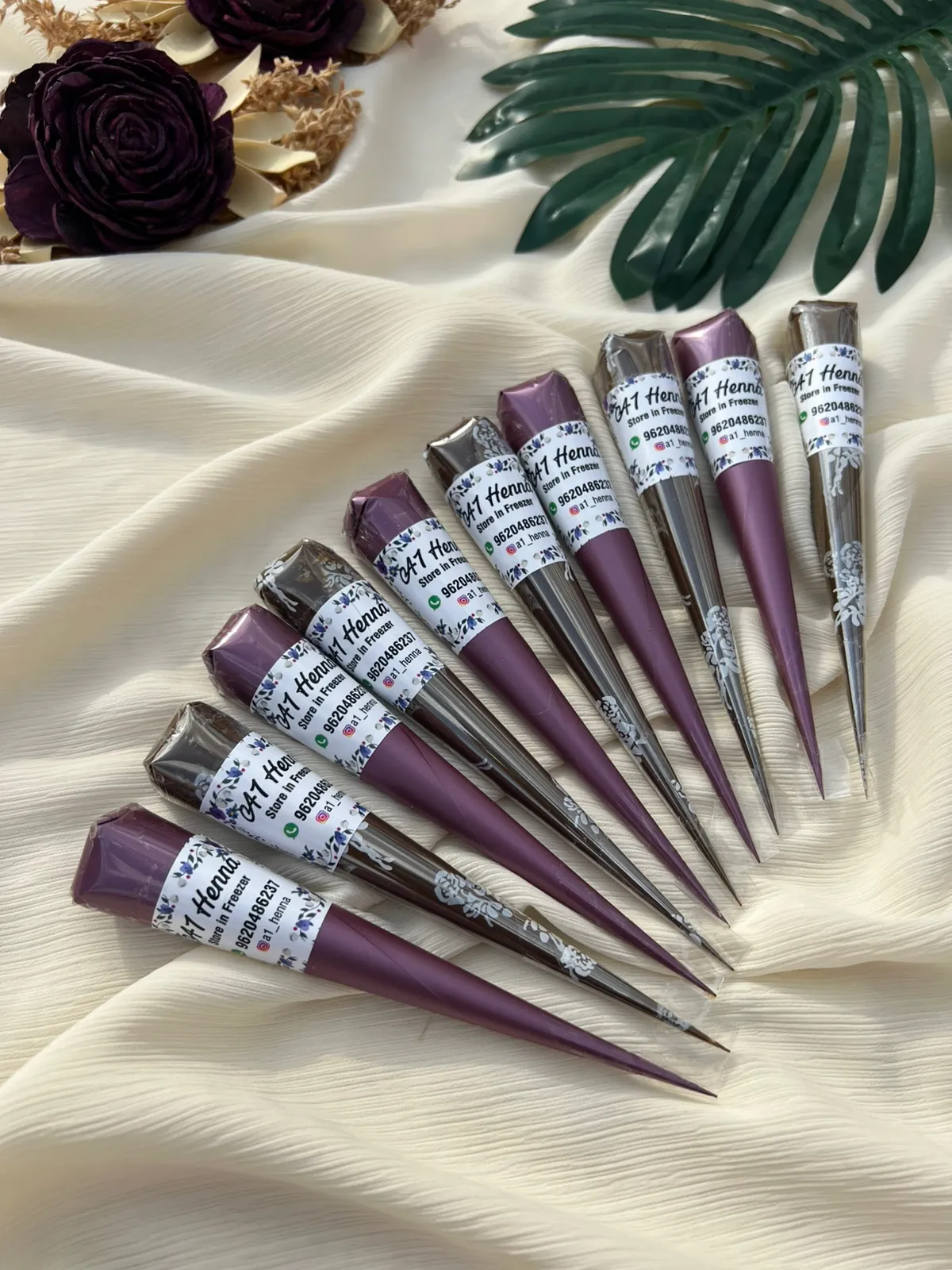 Henna ConesOrganic Henna ConesOrganic henna paste * Rich, natural henna stain * Halal · No PPD * Fine tip for detailed designs * Freshly hand-rolled in Bengaluru₹30View product →
That gap is what our 20-day batches are built to close. We're on Batch 11 now, and every one of them starts the same way: someone who's good with her hands, unsure whether that's worth anything to anyone else.
What we actually teach — it's not just designs
A student who can draw a beautiful peacock but doesn't know what to charge for it, how to keep her paste consistent, or how to talk to a bride who wants a discount — she's still stuck. So the batch covers all of it:
- Design and technique — building from a blank hand to a full bridal design, not just copying reference photos.
- Paste-making and hygiene — the part nobody puts on Instagram, but it's what separates a hobbyist from someone a client trusts with their skin.
- Pricing your work — I cover this properly in how to price your mehndi work, because underpricing is the single fastest way a skilled woman quits before she's given herself a real chance.
- Sourcing supplies — so she's not stuck buying whatever's cheapest and nearest, which is often the reason a new artist's first few stains disappoint a client.
- Running the actual business — bookings, client conversations, building a portfolio. How to build a henna artist portfolio started as a handout for exactly this part of the batch.
Read a fuller breakdown of what a batch covers day by day in henna classes in Bangalore: what to expect.
Why women, specifically
Henna work fits around a life in a way a lot of jobs don't — you can build a client base while managing a home, study alongside another job, start small and scale as your confidence grows. I've watched women who came in nervous about even holding a cone properly leave the batch booking their first paid sittings within weeks. That shift — from "maybe I could" to "I have a client Saturday" — is the actual product I'm building, more than any single cone.
This isn't charity — it's a real trade
I want to be clear about something: this isn't a favour I'm doing. Every woman who trains with us pays for the batch and works for her fee once she's out there — this is a skill trade, not a handout, and I think that distinction matters. Treating it as a real professional path, not a hobby class, is exactly what makes the outcome real. A student who walks out able to price, source and book her own work has something nobody can take back from her.
What I've learned running eleven batches
A few things surprised me along the way. The women who do best aren't always the most naturally talented artists at the start — they're the ones who take the pricing and business lessons as seriously as the design ones. Confidence with a cone comes with practice; confidence charging what your work is worth takes longer, and it's the part I push hardest on now. I also learned to keep batches small enough that everyone gets real one-on-one correction — a class where the teacher never watches your actual hand movement doesn't fix the habits that make lines wobble.
The doubt almost every batch starts with
Nearly every new batch, someone tells me some version of "I'm probably too late to start this" — too old, too out of practice, too far from wherever she thinks a "real" henna artist is supposed to start from. I understand where it comes from, but it's almost never true. Some of the women who've gone on to build the steadiest client bases joined a batch in their thirties or forties, after years away from henna entirely, or after a completely unrelated career. Skill with a cone has very little to do with age or background and a lot to do with whether you actually practise — that's the one thing I can't do for anyone, but everything else I can teach.
Who this is for
Women from every kind of background join — some coming straight out of college, some rebuilding a career after a break, some who just always loved henna and finally decided to take it seriously. From Jayanagar, Koramangala, HSR Layout, BTM Layout and every corner of Bangalore, and a few who've travelled in for a batch. What they share is wanting a real skill they own outright, not one that depends on anyone else.
Where I want to take this
Eleven batches in, this is still the part of Hennaya I want to grow the most — more women trained, more of them earning confidently, more of them eventually teaching the next batch themselves. I write more about that longer-term direction in my vision for Hennaya.
If you've ever thought "I could probably do henna properly if someone just showed me the parts I'm missing" — that's exactly who these batches are for.
Questions people ask
What do Hennaya's training batches actually teach?
Not just design — the full skill set: paste-making, hygiene, pricing your work, sourcing supplies, and how to actually run a henna business day to day. It's a 20-day batch, and we're now on Batch 11.
Do I need any experience to join a batch?
No. Most women who join have never picked up a cone professionally before — some have never picked one up at all. We start from the beginning and build up.
Can training in henna really become a real income?
Yes, and that's the whole point of how the batches are structured — we don't just teach designs, we teach pricing, sourcing and how to find and keep clients, because a skill without a business behind it doesn't pay rent.
Where are the classes held, and do you take students from outside Bangalore?
In our BTM 1st Stage studio in Bangalore, with students coming from across the city — Jayanagar, Koramangala, HSR Layout, JP Nagar and beyond. Reach out on WhatsApp if you're travelling in for a batch; we can talk through logistics.
Keep reading
My Vision for Hennaya: Where This Is Headed
Aliya on what she's actually building — not just a henna shop, but a studio, a training ground and a livelihood path for women in Bangalore, and where it goes next.
Why I Started Rolling My Own Henna Cones
Aliya on the real reason Hennaya's cones exist — she couldn't reliably buy henna she'd trust on a bride's hands, so she started rolling her own from scratch.
What "Natural Henna" Really Means — My Honest Take
Aliya cuts through the marketing on "100% natural" henna — what the word should actually mean, what to check before you buy, and where honesty has to win over hype.