
✍️ In Aliya's Own Words
Founder's NotesWhat "Natural Henna" Really Means — My Honest Take
Aliya cuts through the marketing on "100% natural" henna — what the word should actually mean, what to check before you buy, and where honesty has to win over hype.
By Aliya, Founder, Hennaya
3 October 2026 · 5 min read

"Natural" is one of the most overused words on a henna cone, and I say that as someone who sells henna. What "natural henna" should actually mean is paste made only from henna powder, a mild acid, sugar and an approved essential oil — nothing else — and I think buyers deserve to know how often that's not what they're getting.
Why I'm suspicious of the word too
I've been in this trade long enough to have seen "100% natural" stamped on cones that, honestly, had no business claiming it. There's no independent body checking every henna seller's ingredient list before it goes on a label. That means the word "natural" often just means whatever the seller wants it to mean, and that bothers me more than it probably should for someone whose own products carry the same word.
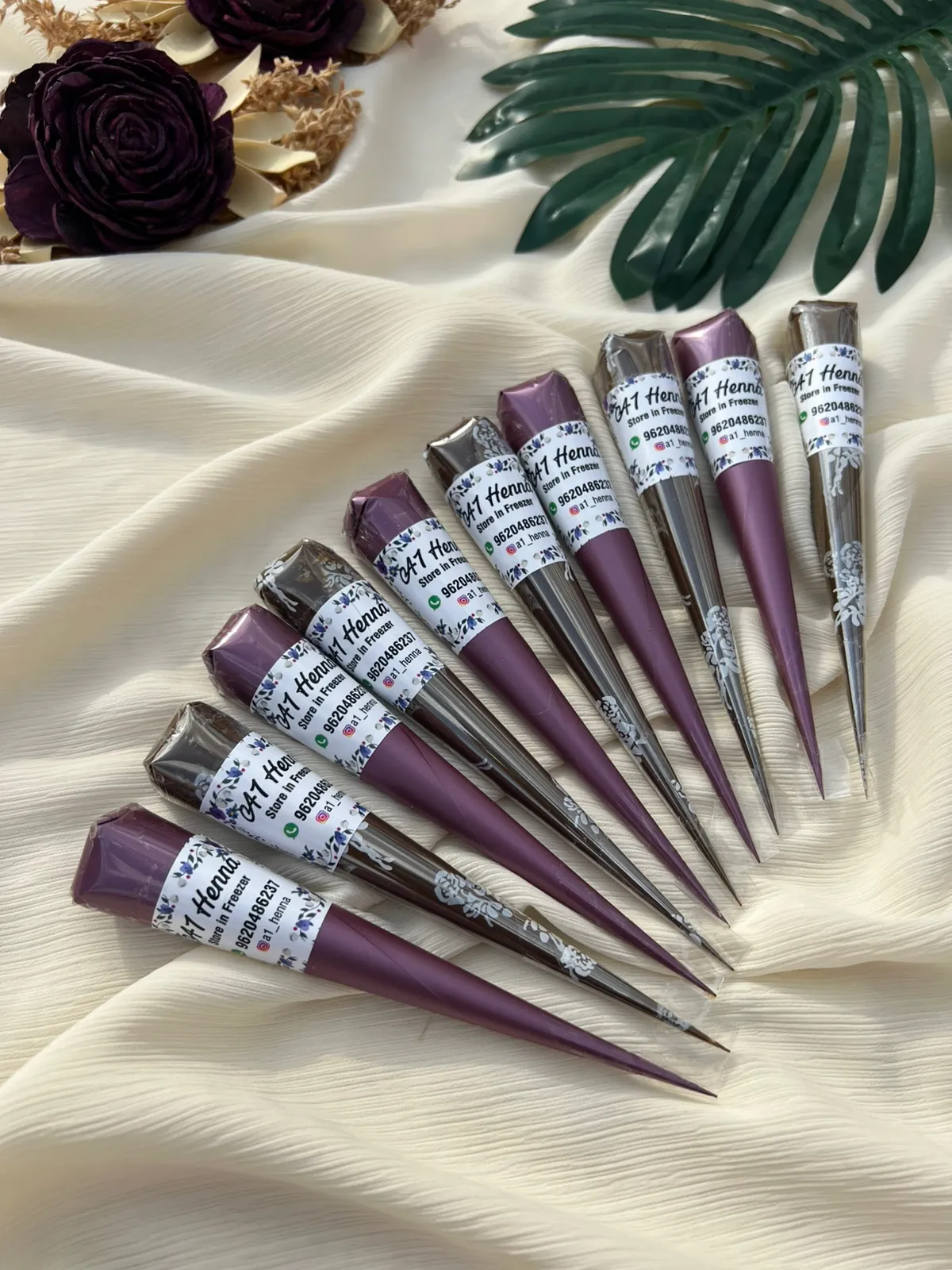 Henna ConesOrganic Henna ConesOrganic henna paste * Rich, natural henna stain * Halal · No PPD * Fine tip for detailed designs * Freshly hand-rolled in Bengaluru₹30View product →
What a genuinely natural cone actually contains
Four things, no more: henna powder (the actual dye source), a mild acid like lemon juice or strong tea (helps the dye release), sugar (keeps the paste flexible on skin so more dye transfers), and an approved essential oil like cajeput or lavender (deepens the stain). I go through the full breakdown, including why some sellers pad this list with things that shouldn't be there, in what's in a henna cone.
The biggest myth I want to put to rest
A stain that goes jet black within an hour is not, and has never been, natural henna. Real henna starts orange and deepens to maroon-brown over a day or two — that's chemistry, not a quality problem. A fast black stain almost always means an added synthetic dye, usually PPD, which can cause serious burns and lifelong allergy in some people. I've written the safety side of this in full in natural henna vs "black henna" — it's the one piece of content on this whole site I most want people to actually read before they buy henna from anyone, including me.
What I check before I'll sell a batch
Deep green, not brown, powder — brown means old or poor-quality leaf. An earthy smell, not a chemical one. A paste that leaves a clear orange test mark within a minute of mixing, which tells me the dye is genuinely active. And a batch date on every cone that leaves the studio, because freshness is the whole game — see henna cone shelf life for why that matters more than almost anything else on the label.
See the cones I hold to this standard →
Where I draw the line on our own claims
I've deliberately pulled back from saying "100%" anything on our own products, even when it's mostly true, because absolutes are the first thing that stops being trustworthy the moment one exception shows up. I'd rather say "no PPD, ammonia or synthetic dye" — something you can actually check — than a blanket claim that sounds good and means less than it should. If you want the full explanation of why we word things this carefully, it's on our disclaimer page.
What this means for you as a buyer
Don't take "natural" at face value from anyone, us included. Ask for the ingredient list. Look for a batch date. Be suspicious of anything that stains black fast or promises results no real henna can deliver. A henna seller who's confident in their product will answer these questions without getting defensive — if they dodge, that tells you something too.
How to actually read an ingredient list
If a seller does share one, here's what I'd look for. Anything past the four core ingredients deserves a question — some additions are harmless and traditional (a touch of clove oil, for instance), but a "colour fixer" or an unnamed "conditioning agent" is where I'd stop and ask directly what it is and why it's there. A seller who can explain every ingredient and why it's included is worth trusting far more than one whose label just says "natural blend" with nothing to back it up.
Why this matters more to me than it probably should
I've seen what a bad reaction does to someone's skin, and I've seen how it puts people off henna — genuinely lovely, safe, centuries-old henna — for years afterward because of one bad experience with something that was never really henna to begin with. Every time I get this right, one more person gets to have the real thing instead.
What I tell every student about this
Every woman who trains with us learns to check henna quality before she ever sells a cone of her own, whether it's ours or someone else's she's considering. I'd rather a graduate of our batches be known for turning down a cheap, questionable supplier than for cutting corners to save a few rupees per cone — that reputation, once lost with a client, doesn't come back easily. It's one of the few things I'm genuinely strict about in the training.
The one question that cuts through most marketing
If you take nothing else from this piece, take this one question to ask any henna seller: "what exactly is in this, and how fresh is it?" A confident, specific answer is a good sign. Vagueness, deflection, or a jet-black promise inside an hour is your cue to look elsewhere — no exceptions, regardless of how nicely the cone is packaged or how many followers the seller has.
Ask what's in your henna. If a seller can't tell you plainly, that's your answer, and it's worth walking away over — your skin isn't the place to find out the hard way.
Questions people ask
What does "natural henna" actually mean?
Paste made only from henna powder, a mild acid to help dye release, sugar, and an approved essential oil — nothing else. No PPD, no ammonia, no synthetic dye, no undisclosed "colour boosters."
Is all henna sold as "natural" actually natural?
No. It's an unregulated label a lot of sellers use loosely. A dark, fast stain in under an hour is the biggest red flag — real henna takes longer and starts orange.
Why does the honest answer matter more than the marketing claim?
Because a bad stain fades in a week; a bad reaction to an undisclosed synthetic dye can affect someone for life. Claims that can't be checked aren't worth trusting, mine included — check for a batch date and ask what's in it.
How can I check if henna is genuinely natural before buying?
Ask for the full ingredient list, check for a batch or harvest date, and be suspicious of a jet-black stain that appears within an hour — real henna is never black and takes 24-48 hours to reach its deepest colour.
Keep reading
Why I Train Women to Become Henna Professionals
Aliya on why teaching became as important as the art itself — turning a skill women already love into a real, confident income, one 20-day batch at a time.
My Vision for Hennaya: Where This Is Headed
Aliya on what she's actually building — not just a henna shop, but a studio, a training ground and a livelihood path for women in Bangalore, and where it goes next.
Why I Started Rolling My Own Henna Cones
Aliya on the real reason Hennaya's cones exist — she couldn't reliably buy henna she'd trust on a bride's hands, so she started rolling her own from scratch.