
✍️ In Aliya's Own Words
Founder's NotesWhy I Started Rolling My Own Henna Cones
Aliya on the real reason Hennaya's cones exist — she couldn't reliably buy henna she'd trust on a bride's hands, so she started rolling her own from scratch.
By Aliya, Founder, Hennaya
4 October 2026 · 5 min read

Every henna business has an origin story, and mine is less romantic than most: I started rolling my own henna cones because I got tired of not being able to trust what I was buying. Here's what actually happened.
The problem that started it all
Early on, I was buying henna cones the way most artists do — from wholesalers, whoever had stock, whoever was cheapest that week. The trouble was consistency. One batch would stain beautifully. The next, from the same supplier, would come out pale and disappointing, and I'd only find out on a client's hand, sometimes on a bride's wedding day. That's not a risk you get to take twice with the same client.
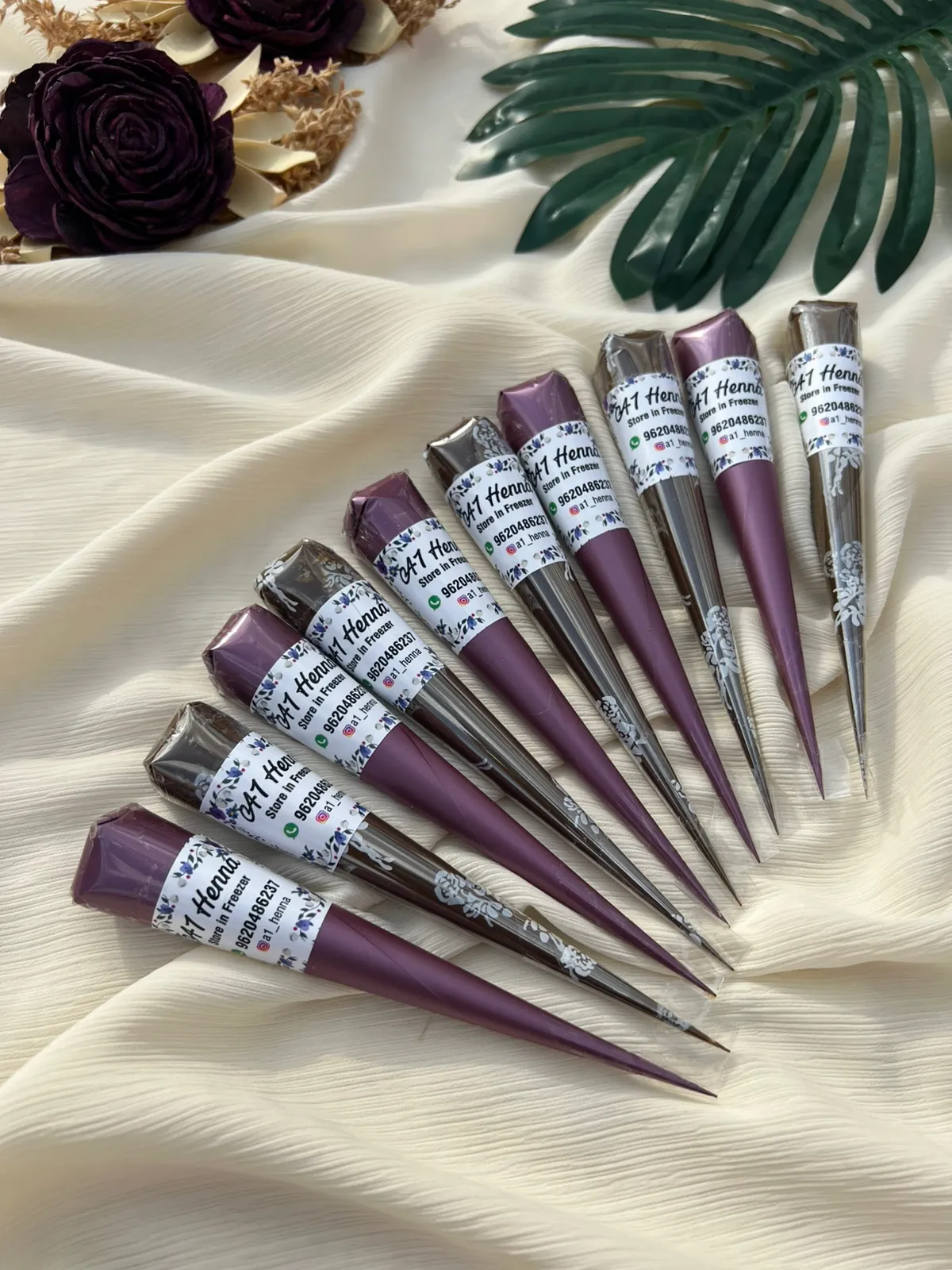 Henna ConesOrganic Henna ConesOrganic henna paste * Rich, natural henna stain * Halal · No PPD * Fine tip for detailed designs * Freshly hand-rolled in Bengaluru₹30View product →
Why I couldn't just switch suppliers
I tried. More than once. The problem wasn't one bad supplier — it was that nobody selling in bulk seemed to treat freshness as the thing that actually mattered. Cones would sit in a shop for months before I bought them, and lawsone — the dye in henna that actually stains skin — breaks down with time and heat. A cone that looked fine on the shelf could already be half-dead by the time it reached a hand. I write about exactly why that happens in what's in a henna cone and henna cone shelf life — lessons I learned the hard way, one disappointing stain at a time.
So I started mixing my own
The first batches were small — enough for my own bookings, nothing more. I controlled the powder, the rest time, the essential oils, everything that actually decides how dark a stain goes. It was slower and more expensive than buying wholesale. It also meant I stopped worrying about what would happen when a client checked her hands two days later.
From my own bookings to a real product line
Word got around faster than I expected. Other artists started asking where I was getting my cones. Clients asked if they could buy some to take home. What started as solving my own problem turned into Hennaya's actual product line — the same recipe, the same small batches, just at a bigger scale, still rolled and dated by hand, not mass-produced in a factory somewhere I've never seen.
What I got wrong in the early batches
I won't pretend every early batch was perfect. I under-estimated how much rest time the paste actually needed before it released dye properly, and a couple of my very first cones went out weaker than they should have. I also learned the hard way that essential oil quantities matter more than instinct suggests — too little and the stain barely deepens, too much and it can irritate skin instead of helping it. Every mistake from those first months is baked into the process we use now; the recipe didn't arrive fully formed; it got corrected one disappointing test stain at a time.
Shop the cones I still use myself →
Four years and a thousand clients later
Over 4+ years and 1000+ clients across bridal mehndi, private events, stalls and exhibitions, the standard hasn't changed even as the business has grown. I still won't put my name on a cone I wouldn't use on a bride myself. That's not a marketing line — it's the actual reason this business exists in the first place, and it's the same standard the dark stain routine I teach students is built around.
Where the teaching came from
Rolling my own cones taught me something else along the way — how much of a "good henna artist" is actually about ingredients and freshness, not just hand skill. That realisation is a big part of why training became such a core part of Hennaya; I cover the fuller reasoning in why I train women to become henna professionals. A student with brilliant technique and a bad cone will still disappoint a client, and I didn't want to teach design without also teaching the part that actually makes the stain work.
What hasn't changed
The studio is still in BTM 1st Stage, Bengaluru. The cones are still hand-rolled, still dated, still delivered the same day across Jayanagar, Koramangala, HSR Layout and the rest of the city, and shipped nationwide for everyone else. What started as one henna artist solving her own problem is now something a lot more people rely on — but the reason it exists hasn't moved an inch.
What I'd tell someone starting from where I did
If you're an artist frustrated with what you can buy, the honest advice is: it's more work than it looks like from the outside, and it's worth it anyway. Rolling your own means owning every part of the outcome — you can't blame a supplier any more when a batch doesn't stain well, which is uncomfortable at first and clarifying after that. Start small, test obsessively on your own hands before anyone else's, and don't sell anything you wouldn't personally sit through a four-hour application wearing.
Where it's going
I think about that a fair bit these days — what Hennaya becomes over the next few years, not just the next batch of cones. I've written that out properly in my vision for Hennaya, if you want the longer version.
The short version, if you're in a hurry
I couldn't trust what I was buying, so I started making my own. It worked well enough that other people wanted it too. Four years and a thousand-plus clients later, the standard I set for myself on day one is still the standard every cone leaving this studio has to meet.
Every cone still starts the same way it did on day one: I wouldn't sell it if I wouldn't put it on my own hands.
Questions people ask
Why did Aliya start making her own henna cones?
Because she couldn't consistently buy henna she'd trust on a bride's hands — batches varied wildly in quality, and a bad stain on someone's wedding day wasn't a risk she was willing to keep taking.
How long has Hennaya been rolling cones?
Over 4 years, alongside more than 1000 clients across bridal mehndi, private events, stalls and exhibitions.
Are the cones still hand-rolled today?
Yes — every cone is still mixed and rolled in small batches in Bengaluru to the same natural-ingredient recipe, not mass-produced.
Does Hennaya deliver henna cones across Bangalore?
Yes, same day — from the BTM 1st Stage studio across Jayanagar, Koramangala, HSR Layout, JP Nagar and the rest of the city, with pan-India shipping for everywhere else.
Keep reading
Why I Train Women to Become Henna Professionals
Aliya on why teaching became as important as the art itself — turning a skill women already love into a real, confident income, one 20-day batch at a time.
My Vision for Hennaya: Where This Is Headed
Aliya on what she's actually building — not just a henna shop, but a studio, a training ground and a livelihood path for women in Bangalore, and where it goes next.
What "Natural Henna" Really Means — My Honest Take
Aliya cuts through the marketing on "100% natural" henna — what the word should actually mean, what to check before you buy, and where honesty has to win over hype.