
How to Host a Mehndi Ceremony: A Simple Checklist
Hosting the mehndi function yourself? Here's the real checklist — booking an artist, ordering enough henna, timing the afternoon and what to skip.
By Aliya, Founder, Hennaya
3 October 2026 · 5 min read

Hosting the mehndi function yourself — at home or a small venue, rather than leaving it to a wedding planner — is one of the most doable parts of an Indian wedding to DIY. A home mehndi ceremony needs three things sorted properly: enough henna, enough hands (artist or otherwise) to apply it, and a realistic timeline — get those right and the rest is decor and snacks.
Here's the checklist we walk families through when they call us for a booking.
1. Decide the scale first
Everything else follows from your guest count. A close-family sitting of 10-15 people is a completely different job from a 50-guest afternoon — the henna quantity, artist count and even the venue layout change. Settle this number before you book anyone.
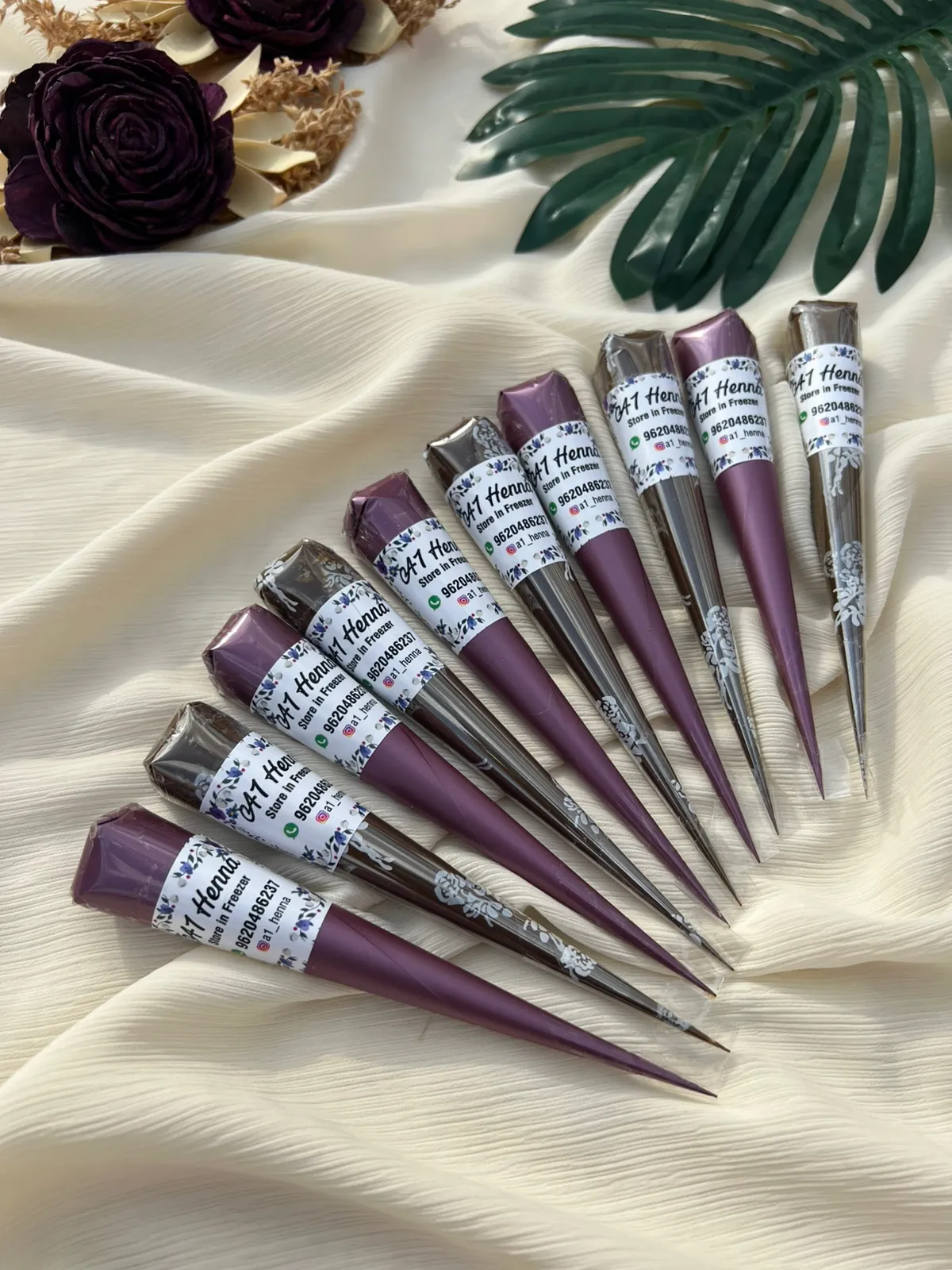 Henna ConesOrganic Henna ConesOrganic henna paste * Rich, natural henna stain * Halal · No PPD * Fine tip for detailed designs * Freshly hand-rolled in Bengaluru₹30View product →
2. Book your artist(s) early
Good mehndi artists get booked weeks out in wedding season, especially around Diwali, Karva Chauth and the winter wedding months. For anything past 15-20 guests, book more than one artist so the afternoon doesn't stretch past dinner — a single artist manages roughly 5-8 simple designs an hour, far fewer for dense bridal work. Our booking a mehndi artist guide has the exact questions to ask before you pay an advance.
3. Work out how much henna to order
This is the step most first-time hosts underestimate. A rough starting point: one 15g cone per guest for a light hand design, and 3-5 cones for the bride going full hands-to-elbow. Our henna quantity guide breaks this down by coverage level, or run your exact numbers through the henna calculator — it'll tell you the cone count and give you a cost estimate too.
4. Set a realistic timeline
Henna paste needs a minimum of 4-6 hours on skin for a decent stain, longer for the bride. Work backwards from when guests need to leave (or the next function starts) and build the sitting order around that — start with the bride and anyone getting a dense design, so their extra drying time overlaps with everyone else's turn.
How to sequence the afternoon
- Start the bride (and anyone doing a full-coverage design) first — they need the longest drying window.
- Run close family and guests in parallel if you've booked more than one artist.
- Serve food and drinks before hands go under the cone, not after — nobody wants to eat with wet paste.
- Keep a fan or AC on where the henna sitters are — warmth actually helps the stain, but a stuffy room just makes a long sitting uncomfortable.
- Have oil or aftercare balm ready for guests to seal their design as the paste comes off.
5. Prep the space
You don't need much — comfortable seating with good back support (people will be sitting still for a while), a low table or cushion to rest hands on, decent lighting for the artist, and old sheets or a tarp under the seating in case of drips. Ask guests to wear clothes they don't mind lightly staining; our fabric stain removal guide is a good link to send round in case someone's outfit meets the paste anyway.
6. Don't overthink food and music
This part genuinely doesn't need a professional planner. Finger food that doesn't need cutlery (samosas, chaat, fruit), a playlist running in the background, and someone assigned to keep drinks topped up for people who now have two unusable hands — that's the whole brief. The mehndi is the event; everything else is just making a long sitting pleasant.
7. Plan the "what happens after" step
Have a clear spot for people to sit once their paste is on and drying — this is usually where most of the actual socialising happens, since everyone's stuck for a few hours anyway. Set expectations that paste comes off dry (scraped, not washed) and water stays off the design for 12 hours after — worth a quick announcement so nobody heads straight to wash their hands.
What you can skip
- A professional decorator, unless your venue genuinely needs it — a few floral garlands and cushions do the job at home.
- Matching outfits for every guest — nice if it happens, not worth chasing.
- Elaborate return gifts — a small aftercare balm or oil is a thoughtful, on-theme favour if you want one.
Common mistakes first-time hosts make
Underestimating the timeline. A design that looks quick on Instagram can still take an artist 30-45 minutes per guest for anything beyond a simple motif — multiply that by your guest count and it adds up fast if you've only booked one artist. Ordering henna the day before. Cones lose staining power over weeks at room temperature — order close to the date, not too far ahead, or keep extras in the freezer (see our shelf life guide). No plan for kids. If children are attending, have a simpler design ready and a shorter drying-time expectation — nobody keeps a six-year-old still for four hours. Forgetting the bride needs to eat. Feed her before her hands go under the cone — once the design starts, that's it for a while.
A rough budget guide
Costs vary a lot by city and artist experience, but for Bengaluru: simple guest designs typically run ₹150-400 per person depending on the artist, while a full bridal sitting is priced separately — see our bridal mehndi cost in Bangalore guide for a detailed breakdown. Henna itself is the smallest line item in the whole event; artist time is what you're really paying for.
Booking in Bengaluru
Aliya and the Hennaya team take home mehndi ceremony bookings across BTM Layout, Jayanagar, Koramangala, HSR Layout and the rest of Bengaluru — see full packages on our bridal mehndi in Bangalore page, or message us on WhatsApp with your guest count and date and we'll tell you straight how many artists and cones you actually need.
Get the henna and the timeline right, and the rest of the afternoon takes care of itself.
Questions people ask
How many henna cones do I need for a mehndi ceremony?
It depends on your guest count and how much coverage each person wants — a rough starting point is one cone per guest for light hand designs, more for the bride and close family going full-coverage. Our henna quantity guide and the henna calculator work it out exactly.
How many artists do I need for a mehndi ceremony?
One artist comfortably covers 5-8 guests doing simple designs per hour, fewer if people want denser work. For 20+ guests plus a bride going full coverage, book at least two artists so the afternoon doesn't run into the evening.
How long does a home mehndi ceremony take?
Plan for 3-5 hours if the bride is getting a fairly full design and guests are getting simpler ones alongside her, run in parallel by more than one artist. A bride-only sitting with no guest henna can be much shorter.
What should guests wear to a mehndi ceremony?
Comfortable clothes they don't mind sitting in for a while and won't mind lightly staining — yellow, green and orange are the traditional festive colours, though there's no strict rule.
Keep reading
Mehndi, Sangeet & Haldi: What's the Difference?
Confused which wedding function is which? A plain-English guide to mehndi, sangeet and haldi — what happens at each, who's involved, and where henna fits in.
Bridal Mehndi in Bangalore: The Complete Bride's Guide
Everything a Bangalore bride needs — when to book, what it costs, which style to choose, the application-day plan, and the aftercare that guarantees a deep stain.
Bridal Mehndi Cost in Bangalore: 2026 Price Guide
Most Bangalore brides pay ₹5,000–₹25,000 for bridal mehndi. What pushes you up or down that range, what a fair quote includes, and how to avoid overpaying.