
Henna for Sensitive Skin & Eczema: What Changes
Natural henna suits most sensitive skin — but eczema, essential-oil sensitivity and 'black henna' change the picture. How to test, choose a cone and apply safely.
By Aliya, Founder, Hennaya
26 July 2026 · Updated 7 October 2026 · 4 min read

Most people with sensitive skin can wear natural henna with no problem — it's a surface stain from a plant, not an oxidative dye. But a few things change the picture, and it's worth knowing them before a big design.
What natural henna actually is
Body-art-quality henna is henna powder, a mild acid, sugar and a small amount of an approved essential oil. It stains the top layer of skin and is scraped off after a few hours. True allergy to pure henna is uncommon. See what's in a henna cone.
The real triggers for sensitive skin
- Essential oils. The terpene oils that deepen the stain — especially clove and cinnamon — are the most common irritants. Cajeput, lavender and tea tree in small amounts are gentler.
- "Black henna." Any cone that promises a fast black stain contains PPD or hair dye — a potent sensitiser that causes chemical burns and lifelong allergy. This is the real danger, sensitive skin or not (natural henna vs "black henna").
- Broken or inflamed skin. Henna on an active eczema or psoriasis patch, a fresh scratch, sunburn or a rash can sting and react.
- Freshly treated skin. Just-waxed, bleached, scrubbed or retinoid-treated skin is more reactive and stains unevenly.
How to use henna safely with sensitive skin or eczema
- Patch test 48 hours ahead with the exact cone — a coin-sized dot on the inner forearm, left on as long as you'd wear a design, then watched for two days (how to do a henna patch test).
- Apply only to clear, unbroken skin. Work around eczema patches, not over them.
- Keep the first design small — a wrist motif or a few fingers — so a reaction, if any, is minor.
- Choose a low-oil cone, or one with a mild oil. Ask the maker.
- Don't leave the paste on longer than needed for your comfort — you can trade a little colour for less skin contact.
- Moisturise the area for a few days before (not the day of) so the skin barrier is healthy.
- Stop immediately if you feel burning, spreading itch or see blistering, wash gently with mild soap and water, and see a doctor (henna allergy: symptoms & treatment).
Who should be extra careful
- Active eczema, psoriasis or dermatitis — clear skin only, small test area, and consider asking a dermatologist.
- Known hair-dye (PPD) allergy — you may already be sensitised; be strict about natural-only henna and still patch test.
- Children with sensitive skin — natural henna only, always patch tested; keep designs small (mehndi designs for kids).
- Pregnancy — see is henna safe during pregnancy (general information, not medical advice).
Reading the patch-test result
| What you see after 48 hrs | What it means |
|---|---|
| Orange → brown stain, no discomfort | Normal. Fine to proceed. |
| Slight dryness or tightness | Usually fine; moisturise and monitor. |
| Redness or mild itch at the spot | Sensitivity — try a lower-oil cone, keep designs small, or skip. |
| Spreading redness, swelling, blistering | Stop. Likely a reaction to an additive or an adulterated cone — see a doctor. |
An irritant response is mild, quick and settles fast; an allergic one spreads, itches intensely and can appear a day or two later and worsen on re-exposure. The delayed pattern is the one to take seriously (henna allergy: symptoms & treatment).
If your skin is fine with henna but not the oil
This is common. Ask the maker for a cone with minimal essential oil or a single mild oil (cajeput, lavender or tea tree), avoid clove and cinnamon, and patch test the new cone. You trade a slightly lighter stain for comfort — worth it if the alternative is a reaction.
A gentle first design
- Placement: back of the hand or a wrist band — easy to keep an eye on, easy to fade if needed.
- Size: small. A few fingers or one motif.
- Time on skin: as long as you're comfortable, not longer. You can trade colour for less contact.
- Aftercare: a fragrance-free oil, and stop if anything feels wrong.
Choosing a cone
Buy body-art-quality, natural cones with a full ingredient list and a batch date, and ask about the essential-oil content. Hennaya hand-rolls natural cones in Bangalore with a printed ingredient list, delivered across BTM Layout, Jayanagar, Koramangala, HSR Layout and Indiranagar — and can advise on a lower-oil option for reactive skin.
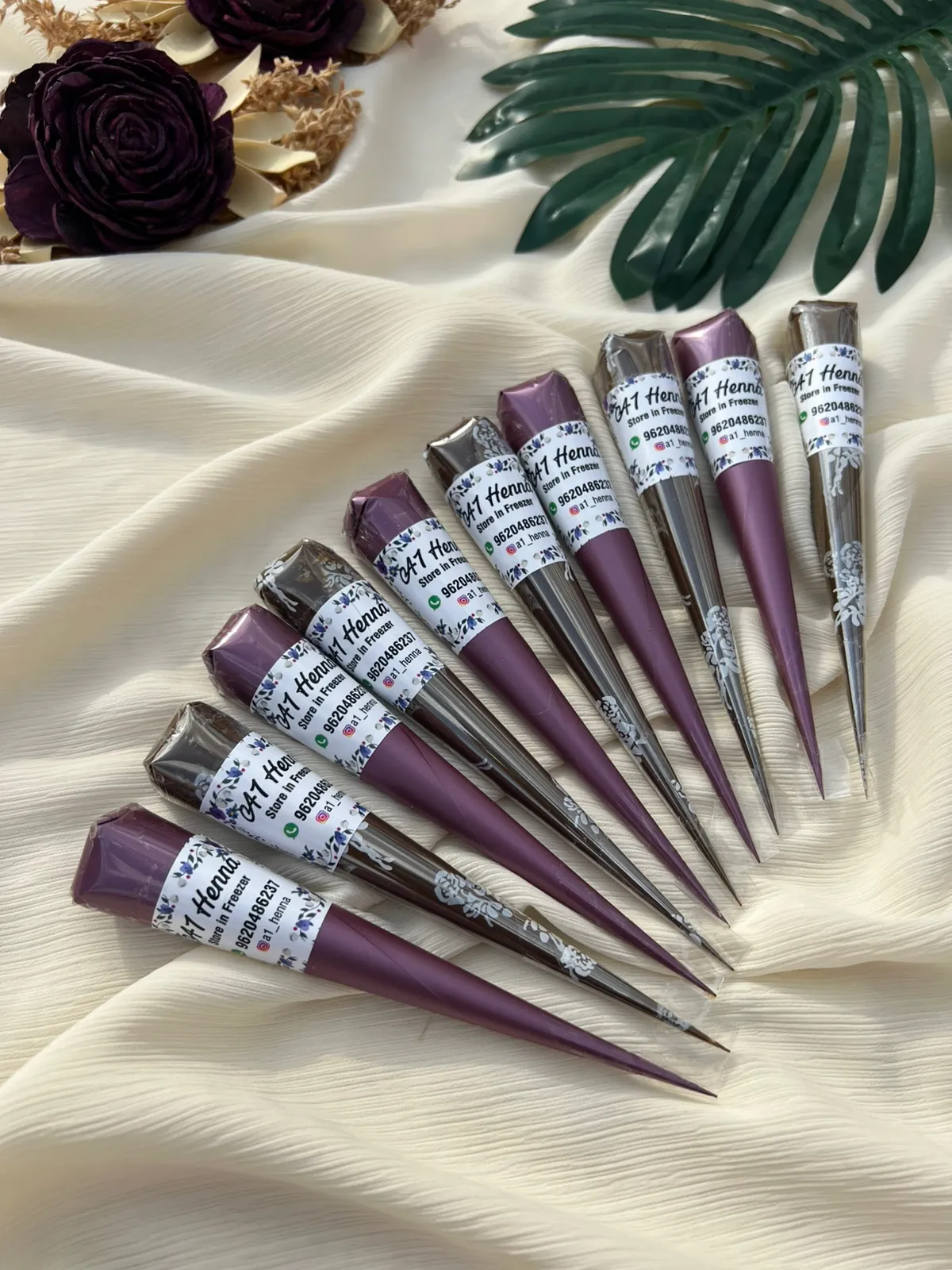 Henna ConesOrganic Henna ConesOrganic henna paste * Rich, natural henna stain * Halal · No PPD * Fine tip for detailed designs * Freshly hand-rolled in Bengaluru₹40View product →
Questions people ask
Is natural henna safe for sensitive skin?
For most people, yes — natural, body-art-quality henna stains the surface of the skin and rarely causes a true allergy. The usual triggers for sensitive skin are the essential oils in the paste, or an adulterated 'black henna' cone containing PPD. Patch test first.
Can I get henna if I have eczema?
Apply only to clear, unbroken skin — never over an active eczema patch, which can sting and react. Patch test on a small area 48 hours ahead, keep the design small the first time, and stop if it itches or burns.
What if I react to the essential oil in henna, not the henna?
Ask for a cone made with minimal essential oil, or with a milder one (cajeput, lavender or tea tree rather than clove or cinnamon), and accept a slightly lighter stain. Patch test the new cone.
Keep reading
Henna Allergy: Symptoms, the Real Cause & What to Do
True henna allergy is rare — most 'henna reactions' are to PPD in 'black henna'. How to tell them apart, what the symptoms look like, and how to treat it.
Natural Henna vs "Black Henna": Know the Difference
Real henna is never jet-black. How to spot an adulterated cone before it touches your skin — by smell, colour and speed — and what to do if it starts to burn.
Henna Tattoos: How Long They Last & What to Avoid
A henna 'tattoo' is a temporary skin stain, not real ink. How long it lasts, how to make it darker, and the one kind that can scar you — 'black henna'.