
Is Henna Safe During Pregnancy? What Actually Matters
Natural henna on skin in pregnancy — the general guidance, the one real risk to know, and why 'black henna' is an absolute no. Not medical advice.
By Aliya, Founder, Hennaya
14 July 2026 · Updated 7 October 2026 · 5 min read

Henna comes up a lot around baby showers and godh bharai. Here's a balanced summary of what's known. This is general information, not medical advice — your doctor knows your pregnancy.
Natural henna on skin: the general view
Body-art-quality henna sits on the surface of the skin and stains the top layer. Very little, if any, is absorbed. For that reason, natural henna applied to the hands and feet is generally considered low risk during pregnancy for people without specific health conditions, and mehndi at a baby shower is a common tradition.
That said, pregnancy changes skin sensitivity and circulation, so:
- Do a patch test 48 hours ahead, even if you've used henna before — see how to do a henna patch test.
- Apply in a well-ventilated space and keep sessions comfortable.
- Stop if you feel any burning, itching or unusual reaction, and rinse with mild soap and water.
The one real medical caveat: G6PD deficiency
There are documented cases linking henna to haemolysis (red-blood-cell breakdown), primarily in newborns with G6PD deficiency exposed to henna directly. The relevance to an expectant mother is mainly this: if G6PD deficiency runs in your family, raise it with your doctor before using henna, and don't apply henna to a newborn.
"Black henna" — absolutely not
Whatever your view on natural henna, "black henna" is a hard no in pregnancy and outside it. It contains PPD or similar synthetic dyes and causes chemical burns, blistering and lifelong allergy. A jet-black stain in an hour is the warning sign. Read natural henna vs black henna and check what's in a henna cone.
What about essential oils in the cone?
Natural henna cones contain a few drops of an essential oil — usually cajeput, lavender, tea tree or eucalyptus — to deepen the stain. In the tiny quantities present in a cone, applied to a small skin area and scraped off after a few hours, these are generally not a concern. If you'd rather be cautious, ask for a cone made with minimal or no added oil, accept a slightly lighter stain, and avoid cones with clove or cinnamon oil, which are more likely to irritate skin. Never inhale essential oils directly from the cone, and apply in a ventilated room if strong smells bother you.
Common myths
- "Henna heat can induce labour." There's no credible evidence that henna on the skin affects the pregnancy or triggers labour. The "heat" people mean is the mild warmth that helps the stain develop, not body-core heat.
- "You can't get mehndi in the first trimester." There's no henna-specific rule; it's purely about comfort and nausea.
- "Darker henna is stronger and therefore riskier." A dark stain from natural henna just means good powder, time and aftercare — not a stronger chemical.
Trimester notes
- First trimester: many people prefer to wait past the early weeks simply to avoid sitting long or dealing with strong smells during morning sickness. There's no specific henna rule here — it's a comfort call.
- Second trimester: usually the easiest time — energy is better and you can still sit comfortably.
- Third trimester / baby shower: keep sessions short and the position supported; swelling can make hands and feet tender, so a lighter design is kinder.
Practical tips for a pregnancy mehndi
- Choose a natural cone with a full ingredient list and batch date.
- Keep the design to hands and feet; skip large areas if you're prone to overheating.
- Sit comfortably with your back and arms supported, keep water and a straw handy, and don't stay in one position too long.
- Apply in a ventilated room; strong essential-oil smells can trigger nausea.
- Follow gentle aftercare for a good colour without fuss — warmth and dry removal, nothing harsh.
- If anything feels wrong — burning, itching, dizziness — stop, rinse with mild soap and water, and call your doctor.
What the tradition is about
Godh bharai and baby-shower mehndi is a celebration of the pregnancy and a rare hour of stillness for the mother-to-be. The design often includes motifs for the baby — tiny feet, a cradle, a peacock. Keep it meaningful and comfortable rather than maximal; you can always do fuller mehndi after the birth.
A short pre-application checklist
- [ ] Cone is natural, body-art quality, with an ingredient list — never "black henna"
- [ ] Patch tested 48 hours ahead, even if henna's been fine before
- [ ] Checked with your doctor if you have any health condition, or if G6PD deficiency runs in the family
- [ ] Session planned for 30–60 minutes, seated and supported
- [ ] Ventilated room; stop if you feel any burning, itching or dizziness
For design ideas and how to run the session comfortably, see mehndi for godh bharai & baby shower.
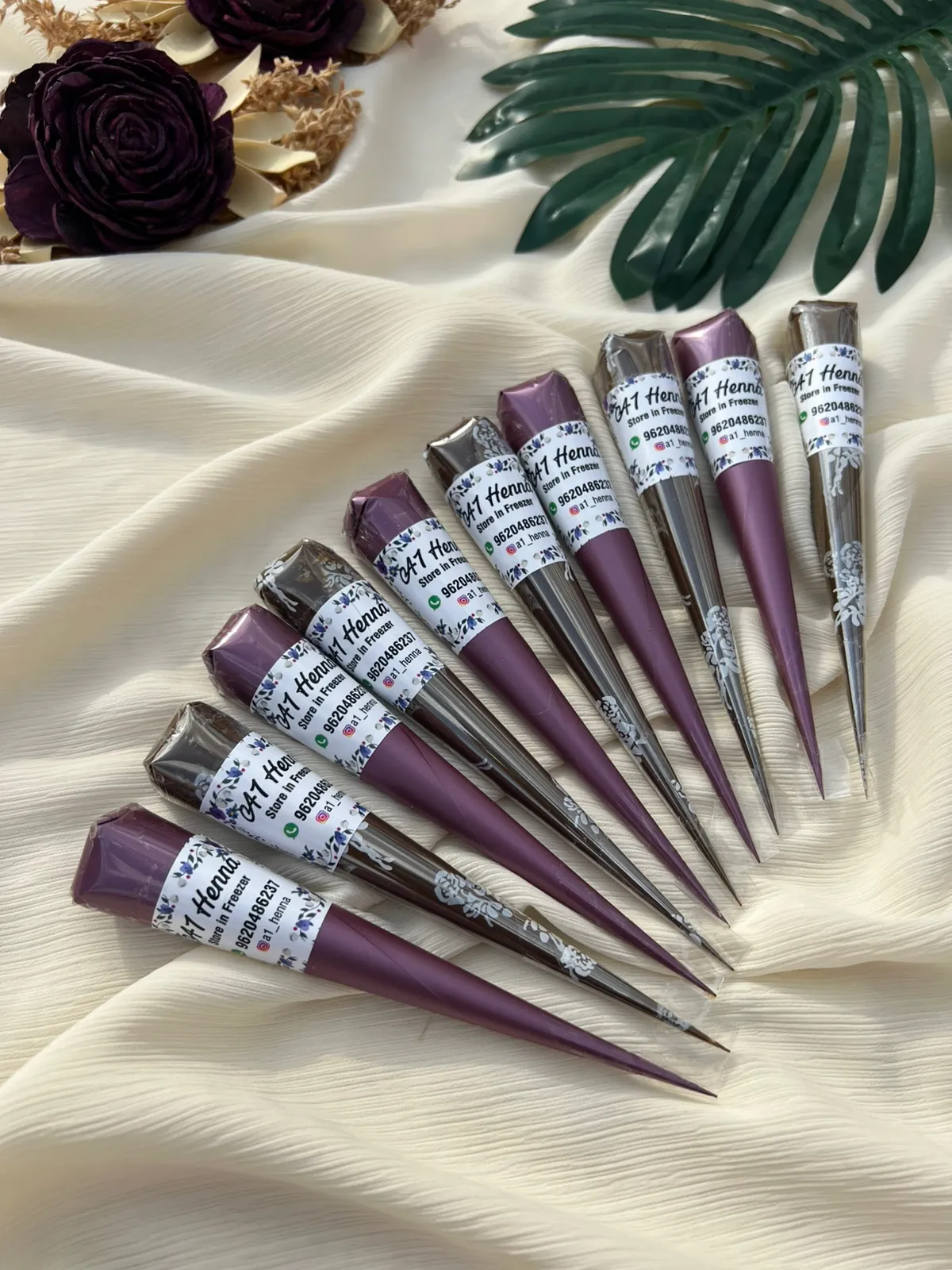 Henna ConesOrganic Henna ConesOrganic henna paste * Rich, natural henna stain * Halal · No PPD * Fine tip for detailed designs * Freshly hand-rolled in Bengaluru₹40View product →
For the baby shower
Simple, elegant designs work best when you may not want a long sitting — see minimal mehndi designs and our family function guide. Hennaya makes natural cones in Bangalore and delivers across Jayanagar, JP Nagar, HSR Layout and Whitefield.
Questions people ask
Can I apply henna on my hands during pregnancy?
Natural, body-art-quality henna applied to the skin is generally considered low risk in pregnancy for people without a G6PD deficiency. Many expectant mothers get mehndi for baby showers. Check with your doctor if you have any health condition. This is the same in every trimester, including the third — henna stains the surface of the skin and doesn't pass into your bloodstream in any real way, so there's no known reason the third trimester would be riskier than the rest of pregnancy. If anything about your own pregnancy worries you, ask your doctor, not this page.
Why is 'black henna' dangerous during pregnancy?
'Black henna' contains PPD or other synthetic dyes that can cause chemical burns and severe allergic reactions. It should be avoided by everyone, and there's no reason to take that risk during pregnancy.
What is the G6PD concern with henna?
In people with glucose-6-phosphate dehydrogenase (G6PD) deficiency, henna has been linked to red-blood-cell breakdown, mainly in newborns exposed directly. If G6PD deficiency runs in your family, ask your doctor before using henna.
Keep reading
Henna Allergy: Symptoms, the Real Cause & What to Do
True henna allergy is rare — most 'henna reactions' are to PPD in 'black henna'. How to tell them apart, what the symptoms look like, and how to treat it.
Natural Henna vs "Black Henna": Know the Difference
Real henna is never jet-black. How to spot an adulterated cone before it touches your skin — by smell, colour and speed — and what to do if it starts to burn.
Henna Tattoos: How Long They Last & What to Avoid
A henna 'tattoo' is a temporary skin stain, not real ink. How long it lasts, how to make it darker, and the one kind that can scar you — 'black henna'.